Benjamin DeasonOwner-operator
★★★★★
“Did a great job, felt like I knew the shop guys all my life. Bunch of good guys who seemed very knowledgeable.”
2024
Exhaust and Turbo
Every tractor in your fleet has somebody who worries about it. Trailers do not. They get dropped, picked up by whoever is on that run, and nobody owns their condition. A driver who would write up a soft pedal on his tractor will pull a trailer with two lights out and a wheel seal weeping because it is not his trailer and he will have a different one tomorrow. That is why trailers are where fleets quietly accumulate violations, and why they are the cheapest place to get some of it back.
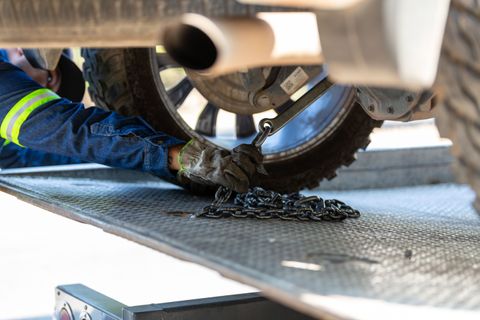
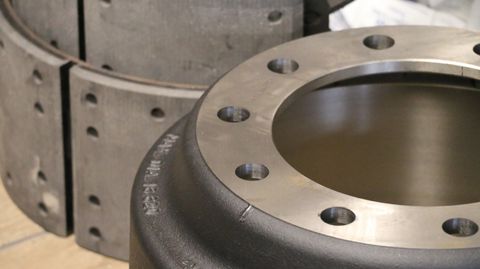
Brakes, which are half the stopping system and the most common trailer defect written at roadside. Wheel ends, hubs, bearings and seals, where a weeping seal contaminates a set of shoes you paid for last quarter. Air lines, gladhands, and the supply and control plumbing that gets dragged through gravel and road salt for a living. Air ride suspension, height control valves, air bags, shocks, torque rods and bushings. Sliders and slider locking mechanisms. Landing gear, including the gearbox and legs that nobody looks at until one folds. Lighting throughout, plus the seven-way, the cord, and the connections at both ends. ABS wheel speed sensors and wiring. Doors, hinges, latches and seals. Tires and wheels across all positions.
We also do the structural side, which a lot of shops will not touch. Welding, floor repair and roof repair are all work we take, and it matters because a trailer with a soft floor or a compromised roof is either out of service or quietly damaging freight, and the alternative for most fleets is a body shop that does not understand trailers.
Aerodynamic skirts and tails too. They get destroyed constantly, they are cheap labor, and they are exactly the sort of thing that never justifies its own trip to a shop and therefore never gets fixed. On a yard rotation they get handled alongside everything else.
What we do not do is refrigeration. Reefer units are a specialist trade with their own equipment and certifications, and you want a refrigeration company on that, not us. We will work on everything else on that trailer.
The right way to handle trailers is nothing like the right way to handle tractors, and fleets who treat them the same lose money doing it.
A tractor is a unit you schedule. A trailer is a population. Sending trailers to a shop one at a time as somebody notices something is the most expensive possible method, because the travel and handling cost more than the repair on almost every one of them.
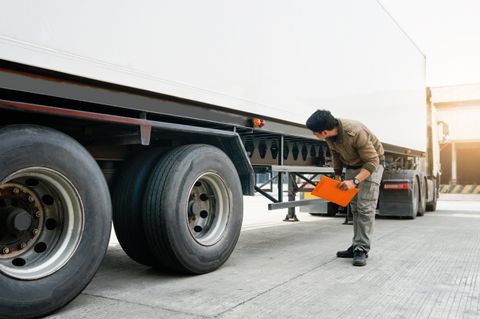
What works is running them as a batch, on your yard, on a rotation. A technician works through whatever trailers are sitting, checking lights, connections, brakes, seals, air bags, landing gear and tires across the group, fixing what is quick and listing what is not. It is fast, it needs no lift for most of it, and it finds the defects that would otherwise be discovered by an inspector at a scale where finding them matters. For a fleet with thirty trailers, this is one of the highest-return uses of on-site time we can offer.
The federal annual inspection applies to trailers as their own unit, on their own cycle. That is a fact fleets forget until a group of them comes due together with lights out, tape peeling and brakes nobody has measured in a year.
Trailer defects also land on the same DOT number as everything else. A trailer put out of service is your driver sitting, your load late, and a mark against your carrier record regardless of whose trailer it technically is. Folding trailers into the same inspection rotation as the tractors is the fix, and it is covered on the DOT inspections page.
Lighting first. It is the most common trailer violation, the cheapest to prevent, and the one most likely to be caused by a corroded connector rather than a bulb. That work belongs with electrical diagnostics and it is a fast, high-volume job on a yard.
Brakes second. Trailer brakes drift out of adjustment, wear unevenly, and get contaminated by wheel seals, and because no single driver owns a trailer, nobody reports the gradual change. Measuring pushrod stroke across a group of trailers takes very little time and finds a surprising number of units that would not pass today.
Air leaks third. Gladhands, lines and fittings on a trailer take more physical abuse than anything on the tractor, and a leaking trailer is a tractor that will not build pressure, which gets diagnosed as a tractor problem and chased in the wrong place entirely.
Landing gear belongs on the short list too, even though it almost never gets there. It is a component nobody services, that gets cranked by every driver who touches the trailer, and that fails in a way which puts a loaded trailer on the ground and turns a routine drop into a recovery. A few minutes of inspection and grease per trailer, on a rotation, is the entire prevention.
Start with the tractor it takes down with it. A trailer that will not hold air, will not light up, or will not release its brakes puts a working tractor and a paid driver out of service in a customer's yard.
Then the inspection exposure, which is real and cumulative. Then the wheel end failures, because trailer axles carry weight for hundreds of thousands of miles with less attention than any other part of your fleet, and a seal that failed six months ago is a bearing today.
And then there is the version fleets never count: the trailer that sits in the yard because everybody knows it has problems, so nobody takes it. That is an asset you bought, insured, and are not using, and it is usually one afternoon of work away from being back in service.
One organisational note that helps more than it sounds like it should: number your trailers visibly and keep records by number rather than by date. Trailers move between drivers, terminals and loads constantly, and a defect reported on Tuesday by one driver is invisible to the person who takes it Thursday unless it lives against the unit rather than in somebody's memory. Fleets that track trailers as individual assets find their problems months earlier than fleets that treat them as interchangeable.
We diagnose it.
You hear what we found.
You approve it.
We do the work.
Pricing on request, and references from fleets your size. What you will not get is a number you did not approve.
The work that usually rides along with this one.
“Turbo blew on 85. They took care of getting me towed to their shop. The next day, they jumped on my 379 pete and swapped my turbo and air to air. Charged my ac and was on my way.”Benjamin Deason · Google review, Greer
“Did a great job, felt like I knew the shop guys all my life. Bunch of good guys who seemed very knowledgeable.”
“Was on the road and ran into an issue. Looked this place up and they were right down the road. Got in and out quick and back on the road.”
“Called ACME for my driver who was on the side of I-85 in Greer. The line was busy, so I moved on and called another company. The gentleman with ACME not only called me back.”
Yes, and it is the right way to do it. Trailers are a population rather than a schedule, and working through a batch of them on your property, checking lights, brakes, seals, air bags, landing gear and tires, costs a fraction of sending them somewhere one at a time. Most of what trailers need does not require a lift.
Yes, each trailer on its own twelve month cycle, same as a tractor. It catches fleets out because the trailers do not have a driver reminding anyone. The practical answer is to put them on a rotation alongside the tractors so the due dates spread across the year rather than landing in one month.
Almost always corrosion at a connection rather than bulbs. The seven-way, the cord and the terminations at both ends live in road spray, salt and vibration, and they corrode on a predictable schedule. Replacing bulbs repeatedly is a sign that nobody has looked at the connections, which is the actual repair.
The trailer's, most likely, and it is a common way for a fleet to waste money diagnosing a tractor. Gladhands, supply lines and trailer plumbing take heavy abuse and leak. If a tractor behaves with one trailer and not another, that is useful diagnostic information, so tell us that on the phone.
In the shop or in your yard. Same straight answers either way.
Mon to Fri, 8am to 5pm. After hours by arrangement.
Mobile trucks and roadside cover the Upstate. Dedicated on-yard technicians work anywhere in the Southeast.
Call the shop or send the request. You'll get the diagnosis straight and a number before we start.