Benjamin DeasonOwner-operator
★★★★★
“Did a great job, felt like I knew the shop guys all my life. Bunch of good guys who seemed very knowledgeable.”
2024
Exhaust and Turbo
Equipment down is a different problem from a truck down, and anyone who has managed both knows it. A truck can be driven in or towed. A machine sits exactly where it stopped, which is usually somewhere with no shop access, holding up whatever work was happening around it. The crew is standing there. The rental clock, if there is one, is still running. And the shop you called has not phoned back, because equipment work does not fit neatly into anybody's schedule.
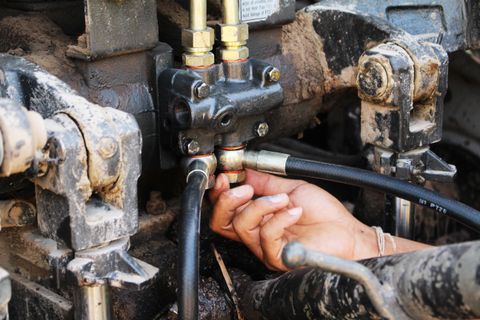
The diesel side of the machine, which is most of what actually strands equipment. Engines, from diagnosis through repair. Cooling systems, which fail hard on equipment because these machines work at sustained load in dust and heat. Electrical, starting and charging, which accounts for an enormous share of will-not-start calls. Fuel systems, filters and water separation. Air systems and brakes where the machine has them. Belts, hoses, and the routine service that keeps all of it going.
To be specific, because a vague answer here wastes your time and ours: we work on construction machines with diesel engines, and on yard spotters and terminal tractors.
What we do not do is deep hydraulics. Pumps, valve bodies and cylinders are their own trade, and on most machines the hydraulics effectively are the machine, so if that is what failed you want somebody who does nothing else. Undercarriage and track work is out for the same reason. You will hear that on the phone rather than after you have waited a week on us.
The diesel engine in a machine is a diesel engine, and a great deal of what we know about trucks transfers directly. Fuel delivery, air delivery, cooling, charging and starting all behave the same way and fail for the same reasons.
What is different is the environment and the expectations. A machine works at sustained load rather than in the varied cycles a highway truck sees, so heat management matters more and a marginal cooling system fails sooner. It works in dust, which turns air filtration from a maintenance item into a consumable. It vibrates constantly, which finds every loose connection and chafed wire on the machine. And it has no dash full of warnings that anybody is trained to escalate, so problems tend to be reported as the machine acting up rather than as a specific fault.
The other real difference is that nobody drives a machine to a shop. A truck that is running badly still gets somewhere. A machine that is running badly stays exactly where it is, which is why the diagnosis has to travel and why a shop that only works on what arrives in its bay is not much use to you.
Equipment maintenance intervals run on hours, and hours behave nothing like miles.
A machine at sustained load for eight hours has worked its oil, its coolant and its air filtration far harder than a truck that covered four hundred miles that day. Dust is the other factor trucks do not deal with the same way: air filtration on a machine working in dirt is a consumable in a way it simply is not on a highway tractor, and a restricted filter on a working machine goes from fine to damaging quickly.
So the schedule looks different. More frequent air filtration checks, coolant that gets tested rather than eyeballed, oil intervals set against hours and duty rather than a calendar, and greasing that actually happens at the frequency the machine's design assumes rather than the frequency somebody has time for. It is the same approach as our preventive maintenance work on trucks, translated to how machines actually wear.
This is the part that matters most on this page, because the alternative is usually transport.
Our technicians go to the machine, which means a job site, a yard, a laydown area, or wherever it stopped. Diagnosis, electrical and starting problems, cooling repair, fuel and filtration work, belts and hoses, and routine service all happen on site. That is the same on-call capability described on our mobile repair page, pointed at equipment instead of trucks.
When a machine genuinely has to move, you get told that early rather than after a technician has spent a day proving it, so the transport can be arranged once, deliberately, rather than as an emergency.
If you have several machines in one place, say so when you call. Working through a group on one visit is far more efficient than a separate trip per machine, and it lets us get ahead of the units that are not broken yet rather than only touching the one that stopped.
It is rarely the machine that costs the money. It is everything waiting on the machine.
A loader down is a crew standing, a truck cycle broken, and a schedule that slips into next week. On a job with liquidated damages or a hard completion date, the machine is the smallest number in the conversation. If it is rented, the meter usually keeps running while it sits broken, which is a cost most people discover the first time it happens to them.
There is also a maintenance version of this that is easy to miss. Machines accumulate hours quickly and quietly, and because nobody is watching an odometer, service intervals slip further on equipment than on any truck in a fleet. A machine that is two hundred hours past its service is not obviously overdue to anybody looking at it, which is exactly how equipment ends up failing from something entirely preventable.
And the second-order cost is worse. A machine that has been unreliable gets worked around: the crew plans without it, work gets sequenced differently, and eventually somebody rents a replacement while still paying to own the original. Reliability on equipment is worth more per hour than on almost anything else in a fleet, because the machine is never the only thing depending on itself.
We diagnose it.
You hear what we found.
You approve it.
We do the work.
Pricing on request, and references from fleets your size. What you will not get is a number you did not approve.
The work that usually rides along with this one.
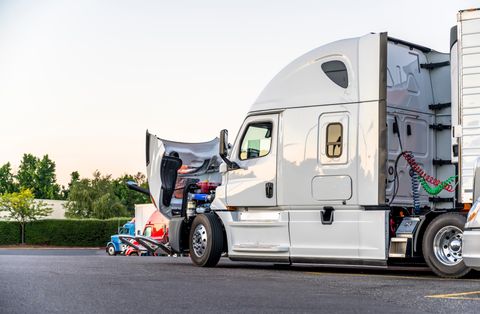
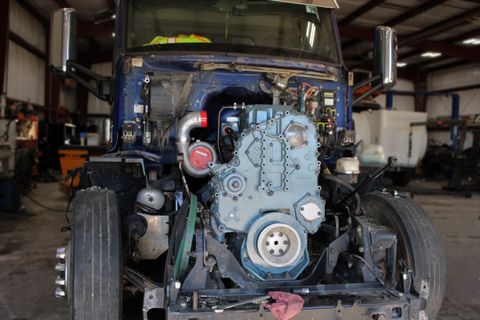
“Turbo blew on 85. They took care of getting me towed to their shop. The next day, they jumped on my 379 pete and swapped my turbo and air to air. Charged my ac and was on my way.”Benjamin Deason · Google review, Greer
“Did a great job, felt like I knew the shop guys all my life. Bunch of good guys who seemed very knowledgeable.”
“Was on the road and ran into an issue. Looked this place up and they were right down the road. Got in and out quick and back on the road.”
“Called ACME for my driver who was on the side of I-85 in Greer. The line was busy, so I moved on and called another company. The gentleman with ACME not only called me back.”
Yes. Most equipment work has to happen where the machine is, because moving it is expensive and slow. Our technicians handle diagnosis, electrical and starting problems, cooling, fuel and filtration, belts and hoses, and routine service on site. Tell us what the machine is doing and where it sits and we will tell you honestly whether it is a site job.
Construction machines with diesel engines, plus yard spotters and terminal tractors. On those we handle the diesel and chassis side: engine, cooling, electrical and charging, fuel, filtration, air and brakes. Deep hydraulic work and undercarriage or track work are not ours. Call and describe the machine and you will get a straight answer before you plan around us.
Yes, and equipment benefits from it more than trucks do because hours accumulate faster than anyone tracks. We set intervals against hours and duty rather than a calendar, and for a mixed fleet we can put trucks and machines on the same rotation so one visit covers both.
Almost always, and it is usually cheaper than expected. Will-not-start calls on equipment are dominated by batteries, cables, grounds, starting circuits and fuel delivery, and most of them are found and fixed on site in a single visit. It is rarely worth arranging transport before somebody has looked at it.
In the shop or in your yard. Same straight answers either way.
Mon to Fri, 8am to 5pm. After hours by arrangement.
Mobile trucks and roadside cover the Upstate. Dedicated on-yard technicians work anywhere in the Southeast.
Call the shop or send the request. You'll get the diagnosis straight and a number before we start.