Benjamin DeasonOwner-operator
★★★★★
“Did a great job, felt like I knew the shop guys all my life. Bunch of good guys who seemed very knowledgeable.”
2024
Exhaust and Turbo
An aftertreatment fault does not break a truck. It ties one hand behind its back, then the other. The lamp comes on, the driver keeps running, the derate steps down, and eventually you have a loaded truck doing forty on an interstate grade with a customer expecting it somewhere else. Aftertreatment is also the system fleets most often get sold the wrong repair on, because the part that is plugged is rarely the part that caused it.
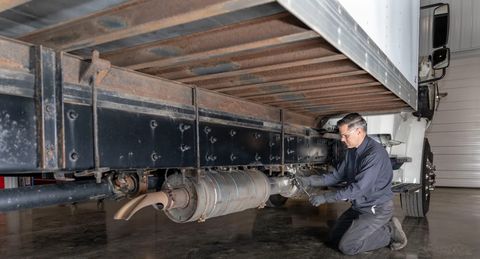
A diesel particulate filter is a filter. When it plugs, the useful question is not why the filter failed. It is what put more soot into it than the system was built to burn off.
Sometimes the answer is duty cycle. A truck running short urban routes with heavy idle time never gets hot enough for long enough to regenerate properly, and that fleet is going to fight its filters no matter who works on them. More often the answer is upstream: a leaking injector putting fuel where it should not be, a turbo that is not making boost, an EGR system flowing wrong, a charge air leak, or a sensor reporting numbers the engine is making decisions on. All of those show up as a soot problem at the back of the truck.
It also helps to know which regen the truck is actually failing at. A passive regen happens on its own when exhaust temperatures stay high enough for long enough, which is why highway trucks fight this less than city trucks. An active regen is the engine dosing fuel to raise those temperatures deliberately. A parked regen is the truck admitting it cannot get there on its own. A unit that needs parked regens regularly is not a filter problem, it is a truck telling you something upstream has changed.
Replace the filter without answering that question and you have bought yourself a few months. That is why aftertreatment work here starts on the engine side, in the same territory as engine repair, before anybody quotes you a filter.
The system is bigger than the filter. We diagnose and repair across the whole aftertreatment train: the diesel oxidation catalyst, the particulate filter itself, the SCR catalyst, the DEF tank, pump, lines and dosing injector, and the sensors the whole thing runs on, which means NOx sensors, temperature sensors, and the differential pressure sensor and its plumbing.
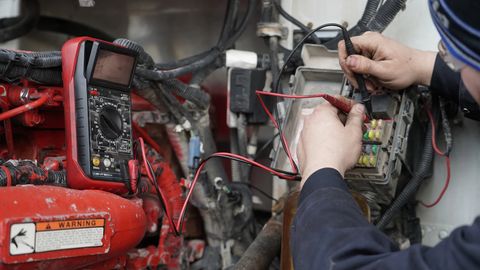
A significant share of aftertreatment faults are electrical rather than mechanical. Chafed harness, corroded connector, a sensor that reads plausibly wrong instead of obviously wrong. Those get chased properly rather than replaced hopefully, which is work that overlaps directly with electrical diagnostics.
DEF quality and the DEF system get checked as part of this. Contaminated or degraded fluid causes faults that look like hardware failures and get repaired like hardware failures, expensively.
We can run the forced and stationary regens a repair calls for and complete the resets afterward, which means the truck leaves here finished. It does not leave with the work done and a fault somebody else still has to close out.
A plugged filter is not automatically a dead filter, and there is a cleaning market for exactly that reason. Our default is still replacement, and it is worth saying why rather than leaving you to guess.
A filter that has run long enough to plug has ash through it that cleaning removes imperfectly. It comes back with less service life than a new one and no reliable way to tell you how much less. On a truck going straight back into the same duty cycle, that difference tends to show up as another interruption inside a year rather than as a saving. A cleaned filter also quietly changes the subject. If the cause is upstream, cleaning gives you a fresh start on the symptom and does nothing at all about the reason.
Where the filter is cracked, melted, or cooked by regens running on a system that should not have been regenerating, replacement is not a preference, it is the only option. Either way you get told what condition the filter is actually in before you commit to anything.
Where this work happens depends on how far the truck has already derated.
Sensor faults, DEF system work, wiring repair, and diagnosis are all things our technicians do on your yard or at the roadside. Getting an accurate read on what is actually happening usually does not require a lift, it requires somebody willing to spend the time on it.
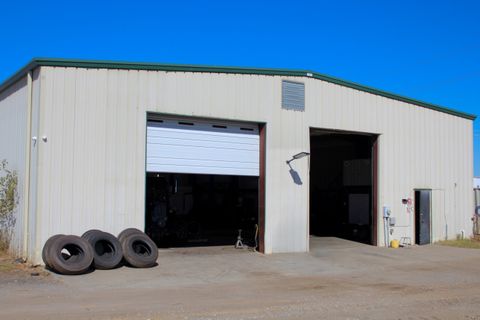
Filter removal, cleaning or replacement, and anything that turns into upstream engine work belongs in Greer. If a truck is already derated to the point where it cannot safely make the trip, tell us that on the phone rather than after. On call means a real technician answers, not a dispatch queue, and part of what that technician is deciding is whether the truck should be driven in at all.
The expensive part of aftertreatment is almost never the repair. It is the weeks of running a truck at reduced power while somebody decides what to do about it.
A derated unit burns more fuel doing less work, runs late, and puts a driver in a truck they are frustrated with. Meanwhile the condition that caused the fault is still there, still making soot, and often still damaging something. A leaking injector that plugged a filter does not stop at the filter. A turbo that is not making boost does not fix itself. The truck is telling you something specific, and every week you run it derated is a week of paying for the diagnosis without receiving it.
We do not delete or bypass emissions systems. It is illegal, it makes the truck unsellable and uninsurable in ways that outlast the savings, and it is not a service we offer at any price. What we do instead is fix the reason the system is struggling, which is the version that actually holds.
We diagnose it.
You hear what we found.
You approve it.
We do the work.
Pricing on request, and references from fleets your size. What you will not get is a number you did not approve.
Symptoms often start one system over. If the diagnosis points there, these are the usual suspects.
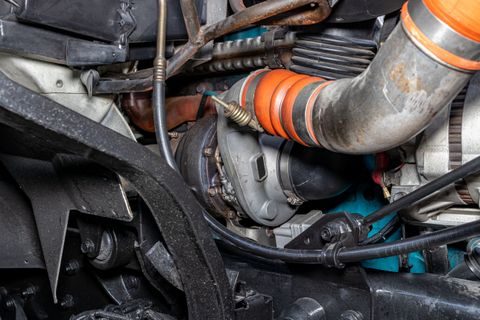
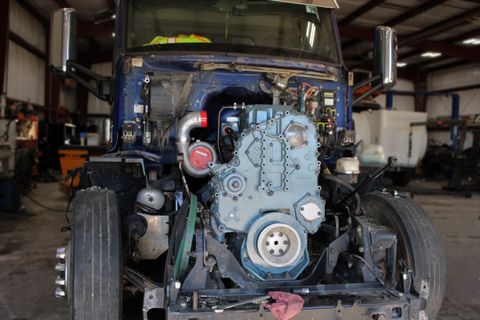
“Turbo blew on 85. They took care of getting me towed to their shop. The next day, they jumped on my 379 pete and swapped my turbo and air to air. Charged my ac and was on my way.”Benjamin Deason · Google review, Greer
“Did a great job, felt like I knew the shop guys all my life. Bunch of good guys who seemed very knowledgeable.”
“Was on the road and ran into an issue. Looked this place up and they were right down the road. Got in and out quick and back on the road.”
“Called ACME for my driver who was on the side of I-85 in Greer. The line was busy, so I moved on and called another company. The gentleman with ACME not only called me back.”
Sometimes, and it depends entirely on which stage you are in. A solid lamp with no derate is a warning. A flashing lamp or a truck that has already stepped down is the system telling you it has stopped keeping up, and continuing usually turns a sensor or an injector into a filter. Call and describe exactly what the dash is doing and we will tell you straight.
Our normal answer is replacement. A cleaned filter usually comes back with less life left than a new one and no dependable way to tell you how much, which on a truck heading into the same duty cycle buys an interruption more often than a saving. If the filter is cracked or heat damaged, replacement is the only option regardless. We tell you which situation you are in.
Because the filter was the symptom. A filter that plugs again quickly is almost always downstream of something making excess soot: an injector, the turbo, the EGR system, a charge air leak, or a sensor feeding bad data. It can also be duty cycle, if the truck never runs hot enough to regenerate. Either way, the answer is upstream.
No. It is illegal, it exposes the carrier and not just the shop, and it destroys the resale and insurability of the unit. If your filters are plugging often enough that deleting has started to sound reasonable, that is worth a real conversation, because a fleet fighting aftertreatment that hard usually has a specific cause we can find.
In the shop or in your yard. Same straight answers either way.
Mon to Fri, 8am to 5pm. After hours by arrangement.
Mobile trucks and roadside cover the Upstate. Dedicated on-yard technicians work anywhere in the Southeast.
Call the shop or send the request. You'll get the diagnosis straight and a number before we start.