Benjamin DeasonOwner-operator
★★★★★
“Did a great job, felt like I knew the shop guys all my life. Bunch of good guys who seemed very knowledgeable.”
2024
Exhaust and Turbo
Front end problems get reported as opinions. The truck feels loose. It wanders. It rides rough. It fights you in a crosswind. None of that generates a fault code, so it goes in the category of things drivers mention and nobody acts on, right up until the tires come off at 40,000 miles instead of 120,000 and somebody finally asks why. Steering and suspension wear is the most expensive slow problem on a truck, because it bills you through the tires.
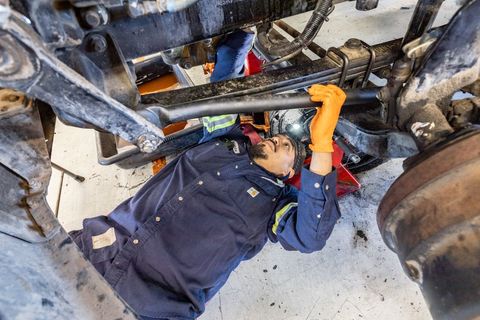
Wandering in the lane, a driver making constant small corrections, usually means play somewhere in the steering: kingpins, tie rod ends, drag link, or the steering gear itself.
A truck that rides hard empty and worse loaded is usually suspension. Failed shocks, sagging or broken leaves, air bags that are not holding, or a height control valve that has quietly stopped doing its job and is running the suspension at the wrong ride height, which affects everything else including how the truck sits under a trailer.
A shimmy or vibration at a particular speed is a balance, wear, or component problem worth chasing rather than living with. And a pull to one side with even tire pressure is alignment or a bent component, not a tire that needs rotating.
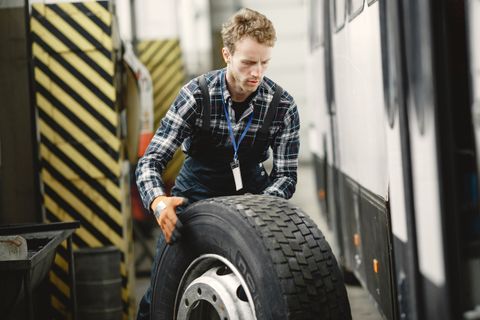
The single most reliable indicator is the rubber. Tires are a written record of what is happening at each corner, which is why suspension and tires belong in the same conversation and are usually the same job.
Kingpins and bushings. Tie rod ends, drag links, and steering linkage. Steering gear and pump. Shocks. Leaf springs, hangers, shackles and U-bolts. Air springs, height control valves, and the air lines feeding them. Torque rods and bushings. Cab air suspension and cab mounts, which drivers feel more than any other component on this list. Trailer suspension, including air ride, sliders and suspension bushings. Fifth wheel wear, play, and mounting, which is both a handling item and an inspection item and gets looked at less than almost anything else on a tractor.
Two things we do not do, said plainly, because you should hear it here rather than after you book the truck. We do not do alignments in house, and we do not press kingpins.
What we do instead is the part that has to come first. We find and repair the worn or bent components that would make an alignment pointless, and then coordinate the alignment itself. Aligning a front end with worn kingpins or loose tie rod ends still in it is money spent twice, and it is a surprisingly common way for fleets to pay for the same problem in two places. Steering gears we replace rather than rebuild.
A word on ride height, because it is the item most often missed. On air ride, the height control valve sets where the truck sits, and a valve that has drifted or failed puts the suspension outside its designed range without breaking anything obviously. The symptoms show up somewhere else: the trailer sits wrong, the fifth wheel loads unevenly, driveline angles change, tires wear strangely, and the ride gets worse. It is a cheap component and a quick adjustment, and it is worth checking any time a truck's handling or wear pattern changes for no apparent reason.
Cab suspension is the other underweighted one. Worn cab air bags, shocks and mounts do not affect how the truck tracks, so they never make the repair list. They do affect the person who sits in it for eleven hours, and a driver who finishes every day beat up by the ride is a retention problem that looks like something else on paper.
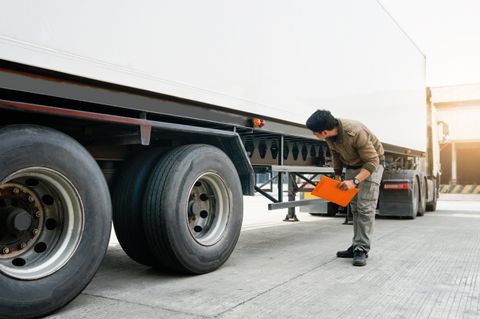
Inspection travels. A technician can check play in the steering, look at kingpins, tie rod ends, shocks, springs and air bags, and read the tires on your yard, which means you can find out what a wandering truck actually needs without pulling it out of service to ask the question. Height control valve adjustment, air line repair at the suspension, and shock replacement are all workable on site as well.
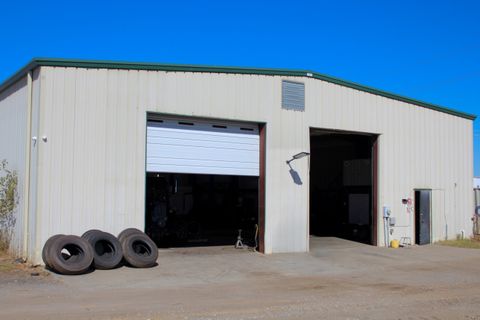
The heavier items belong in Greer. Spring and hanger work, steering gear replacement, torque rods, and anything requiring the truck up with weight off the axle needs the lift and the room. Kingpin wear we diagnose and measure, then coordinate the press work rather than doing it here. When a unit is coming in for that, it is worth handling its brakes at the same time, since the wheel end is already coming apart and the labor overlaps almost completely.
First it costs tires, and it costs them silently. A misaligned or worn front end can take a steer tire down in a fraction of its expected life, and because it happens gradually nobody connects the replacement to the cause. Fleets running this way buy tires at a rate they assume is normal.
Then it costs an inspection. Excessive steering play, worn kingpins and broken suspension components are all measurable, all part of the annual, and all capable of putting a unit out of service at roadside.
Then it costs a driver. A truck that fights all day is exhausting to drive, and drivers who have options do not stay in it. This is the cost fleets underweight the most, because it never appears on an invoice at all.
And occasionally it costs everything, because steering and suspension are the components where failure is not gradual. A kingpin or a tie rod end that lets go at highway speed is not a repair conversation.
One practical suggestion for fleets: have somebody read the tires on every unit, every service pass, and write down what they see. It costs nothing, it requires no equipment, and across twenty or thirty trucks it will tell you which front ends need attention long before a driver complains or an inspector measures. Uneven wear is the earliest and clearest warning this system gives, and most fleets throw it away by only looking at tread depth.
We diagnose it.
You hear what we found.
You approve it.
We do the work.
Pricing on request, and references from fleets your size. What you will not get is a number you did not approve.
Symptoms often start one system over. If the diagnosis points there, these are the usual suspects.
“Turbo blew on 85. They took care of getting me towed to their shop. The next day, they jumped on my 379 pete and swapped my turbo and air to air. Charged my ac and was on my way.”Benjamin Deason · Google review, Greer
“Did a great job, felt like I knew the shop guys all my life. Bunch of good guys who seemed very knowledgeable.”
“Was on the road and ran into an issue. Looked this place up and they were right down the road. Got in and out quick and back on the road.”
“Called ACME for my driver who was on the side of I-85 in Greer. The line was busy, so I moved on and called another company. The gentleman with ACME not only called me back.”
Wear on one edge points at alignment or a worn or bent component at that corner rather than at the tire. Both edges wearing is underinflation. Feathering across the tread points at toe. Whatever the pattern, replacing the tire without correcting the cause resets the clock on the same expense, so it is worth having the front end looked at while the tire is still readable.
It is worth checking soon. Wandering usually means play in the steering, most often kingpins, tie rod ends, or the steering gear, and steering play is both a measurable inspection item and a component category where failure tends to be sudden rather than gradual. It also wears the driver out, which matters more than fleets usually count.
Yes. Play in the steering, kingpins, tie rod ends, shocks, springs, air bags and tire wear can all be inspected on site, so you can find out which units need work without taking them out of service to ask. Spring and hanger work and steering gear replacement need the lift in Greer. Kingpin press work and alignment we coordinate rather than perform.
On air ride, usually a height control valve or a leaking air spring, and sometimes an air supply problem rather than a suspension problem. On spring suspension, it is typically a broken leaf or a failed hanger or shackle. Either way it changes how the load sits and how the truck handles, and on spring suspension it can be a broken component that will keep breaking.
In the shop or in your yard. Same straight answers either way.
Mon to Fri, 8am to 5pm. After hours by arrangement.
Mobile trucks and roadside cover the Upstate. Dedicated on-yard technicians work anywhere in the Southeast.
Call the shop or send the request. You'll get the diagnosis straight and a number before we start.