Benjamin DeasonOwner-operator
★★★★★
“Did a great job, felt like I knew the shop guys all my life. Bunch of good guys who seemed very knowledgeable.”
2024
Exhaust and Turbo

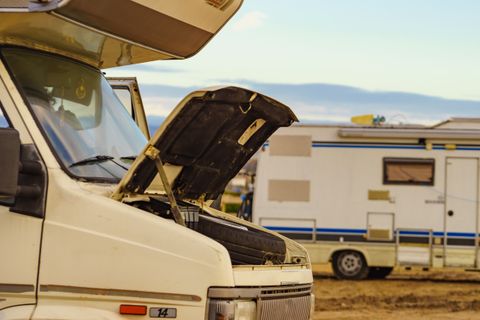
Owners of diesel coaches get bounced. The RV dealer is comfortable with the house, the cabinetry, the slides and the appliances, and considerably less comfortable underneath. The truck shop looks at a forty foot motorhome and thinks about clearance. So the coach sits, and a chassis problem that a heavy-duty shop would recognize immediately turns into weeks of phone calls. The chassis under your coach is a commercial vehicle. That part we know very well.
Being clear about this up front saves everybody a phone call.
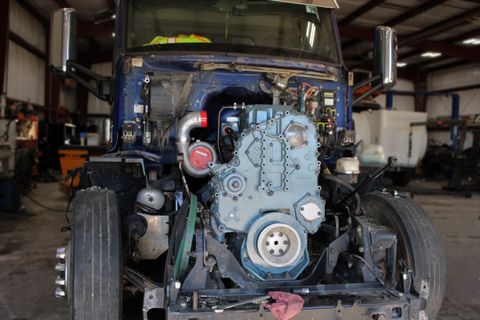
What we do is the running gear. The diesel engine and its diagnosis. Cooling systems, which on a rear-engine coach are a common failure point and a serious one. Air systems, including the supply, the leaks, the dryer and everything the coach runs on air, which is more than most owners realize. Air brakes, including the full range of work on our brakes page. Suspension and steering, chassis electrical and charging, and fluid and filtration service.
What we do not do is the living space. Cabinetry, appliances, plumbing, slide-out mechanisms, roofs and body work belong with an RV shop, and we would rather send you to one than pretend otherwise. We also do not work on generators at all, which is worth knowing before you drive over.
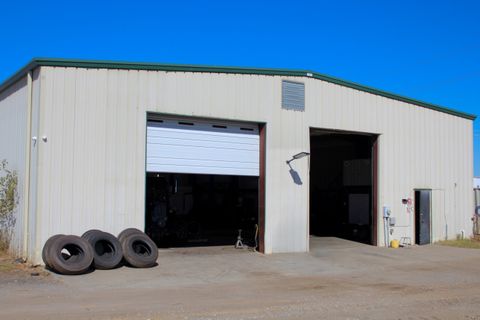
On the practical question every owner asks first: your coach fits. Class A coaches go in our bay, and a fair amount of the work on them gets done outside it, which is normal for a vehicle this size and not a limitation on what we can do.
Leveling jacks are the one chassis-adjacent system we leave alone. They sit closer to the house than to the running gear and they are better handled by an RV shop, so add those to the list alongside generators.
This is the thing that separates an RV from a truck, and almost every problem we see on a coach traces back to it.
A commercial truck runs constantly. A motorhome sits for months, gets driven hard for two weeks, and then sits again. Sitting is not neutral. Batteries discharge and sulfate. Seals dry out and start weeping. Fuel ages. Air systems leak down and moisture collects in tanks nobody has drained. Tires develop flat spots and age out on the sidewall long before they wear out on the tread. Brake components corrode in place, and coolant sits still while its additive package depletes on a calendar that does not care whether the coach moved.
Then the owner takes it out fully loaded, at highway speed, over grades, in summer heat, which is the hardest thing that vehicle does all year, on components that have been dormant since last season. That is why coach failures cluster in the first week of a trip. Nothing broke on the road. It broke while it was parked, and the trip is just when it was asked to work.
Tires deserve their own warning, because they are the item where sitting does the most dangerous damage. A coach can easily age out its tires long before it wears them, and a tire that has plenty of tread and a sidewall that has been cracking in the sun for six seasons is a failure waiting for a hot afternoon on the interstate, fully loaded. Tread depth is the number owners check. Age and sidewall condition are the numbers that matter on a vehicle that sits.
The most valuable thing we do for coach owners is look at the vehicle before it leaves, and it is not a long list.
Air system leak-down testing, which finds the leaks that will strand you somewhere unfamiliar. Brake inspection and measurement. Coolant tested for freeze point and additive level rather than looked at. Fluid and filtration service. Battery and charging condition tested under load rather than checked for voltage. Tires inspected for age and sidewall condition, not just tread. Belts, hoses and any leak traced to its actual source. Chassis lube, which coaches miss constantly because nobody is doing scheduled maintenance on them.
Doing that in the shop, on a scheduled day, before a trip, is a very different experience from finding the same items at a campground four states away where nobody works on diesel. The whole argument here is on the preventive maintenance page and it applies to coaches more than it applies to trucks, not less.
One more thing owners are rarely told: a coach that is stored for the season benefits enormously from being started and moved, not just started. Idling in place does not circulate everything that needs circulating, does not warm the driveline, and does not exercise the brakes or the air system. Half an hour of actual driving once a month does more for a stored coach than any amount of running it in the driveway.
The repair is rarely the worst part.
A commercial fleet with a truck down has procedures, relationships, and other units. A coach owner five hundred miles from home has none of that. What they have is a large vehicle they cannot move, no local shop that works on diesel, a family or a schedule attached to it, and no idea whether the price they are being quoted is reasonable. Being stranded and uninformed is where the real money goes on this, and it is entirely avoidable.
The other cost is slower and quieter. A coach that has sat neglected for several seasons is not one repair away from good, it is a list, and the list gets longer every year nobody looks at it. Coaches that get a scheduled chassis service between seasons hold their condition and their value. Coaches that only get attention when something fails depreciate through their running gear while their interior still looks new.
We diagnose it.
You hear what we found.
You approve it.
We do the work.
Pricing on request, and references from fleets your size. What you will not get is a number you did not approve.
The work that usually rides along with this one.
“Turbo blew on 85. They took care of getting me towed to their shop. The next day, they jumped on my 379 pete and swapped my turbo and air to air. Charged my ac and was on my way.”Benjamin Deason · Google review, Greer
“Did a great job, felt like I knew the shop guys all my life. Bunch of good guys who seemed very knowledgeable.”
“Was on the road and ran into an issue. Looked this place up and they were right down the road. Got in and out quick and back on the road.”
“Called ACME for my driver who was on the side of I-85 in Greer. The line was busy, so I moved on and called another company. The gentleman with ACME not only called me back.”
We work on the chassis of diesel coaches, which is a commercial vehicle under there. Engine, cooling, air systems, brakes, suspension, steering, chassis electrical and fluid service are all squarely what we do. The living space, cabinetry, appliances, plumbing and slides, belongs with an RV shop, and we do not work on generators.
Air system leak-down, brakes, coolant condition, batteries and charging under load, tires for age and sidewall condition rather than tread, and fluids and filters. Sitting is what damages these vehicles, and the failures show up in the first week of a trip, not on the road. A scheduled pass before you leave is far cheaper than a call from somewhere unfamiliar.
Very. RV dealers are set up around the house and the body, and the running gear underneath is a different trade. That gap is exactly why owners of diesel coaches end up stuck between two shops. Bring us the chassis side and we will tell you honestly if something belongs with the RV shop instead.
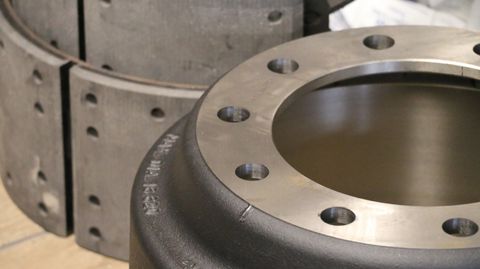
Yes. A coach has air brakes and the work is the same heavy-duty brake service we do on trucks, measured to the same standards. It is also one of the most commonly neglected systems on a motorhome, because coaches accumulate years rather than miles and nobody is running a maintenance schedule on them.
In the shop or in your yard. Same straight answers either way.
Mon to Fri, 8am to 5pm. After hours by arrangement.
Mobile trucks and roadside cover the Upstate. Dedicated on-yard technicians work anywhere in the Southeast.
Call the shop or send the request. You'll get the diagnosis straight and a number before we start.