Benjamin DeasonOwner-operator
★★★★★
“Did a great job, felt like I knew the shop guys all my life. Bunch of good guys who seemed very knowledgeable.”
2024
Exhaust and Turbo
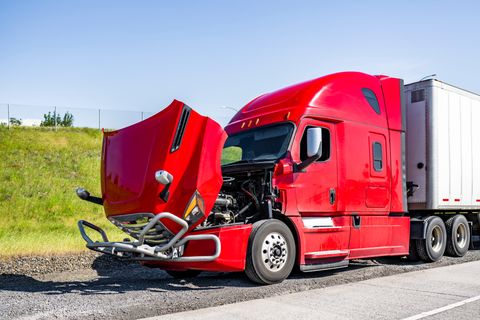
A truck on the shoulder is not a maintenance problem. It is a driver in an unsafe place, a load that is now late, and a customer who is about to find out. Whatever is actually wrong with the unit is, at that moment, the least urgent part of the situation. What you need first is somebody competent to pick up the phone, understand what the driver is describing, and tell you honestly whether this gets fixed where it sits or whether it needs to move.
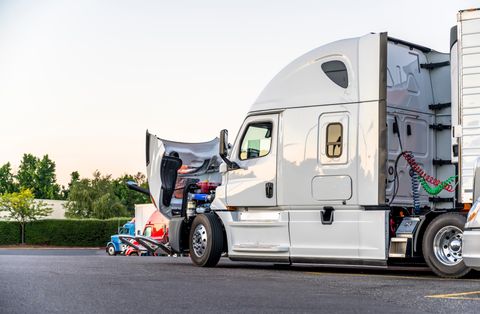
More than a tow operator will tell you and less than a shop will promise.
The common ones are air problems, a truck that will not build enough pressure to release, a line rubbed through, a valve that gave up. Electrical faults, which is a large share of roadside calls: batteries, cables, connections, charging system, a chafed harness that finally shorted. Cooling system failures, hoses and clamps and leaks that can be closed up well enough to move safely. Belts. Lighting that has put a driver out of service. Fuel filter and water separator problems. Aftertreatment faults that have derated a truck to the point where it cannot climb.
Tire work is a common roadside call and we handle it. Brake problems sometimes are and sometimes are not, depending entirely on what failed and where the truck is parked. Some of this crosses directly into air systems, which is the single most common thing that strands a working tractor.
Some things do not get fixed on a shoulder, and pretending otherwise gets somebody hurt.
Internal engine failures, transmission and clutch failures, anything requiring the truck to come apart, and any repair on a unit parked somewhere that is not safe to work in. A tight shoulder on an interstate at dusk is not a shop, and no repair is worth a technician standing in a travel lane.
When that is the answer, you get told immediately rather than after somebody has spent two hours confirming it. The truck needs to move, and the useful thing we can do at that point is tell you clearly what is wrong so the tow goes to the right place and the repair starts the moment it lands instead of starting over.
If you want us to arrange the tow, we will, and we bill it as part of the repair. One call, one invoice, and you are not standing between a tow company and a shop trying to get a straight answer out of either. We work with local operators we trust and use regularly, which matters more than it sounds like it should, because the tow operator usually decides where a truck ends up. Arranged through us, it ends up where you decided.
The call goes better when the driver can answer four things, and it is worth putting this in front of your drivers before they need it.
Where the truck actually is. Not "on 85," but the mile marker, the direction of travel, and which side. What the dash is doing. Which lamps, whether anything is flashing, whether the truck has derated, and what the gauges read. What happened right before it stopped, because a truck that shut down suddenly and a truck that lost power gradually are two different problems. And whether it is loaded, because that changes the decision about moving it.
A driver who can give those four answers turns a guessing exercise into a diagnosis before anyone is dispatched. It is the cheapest thing on this page and it saves more time than anything else on it.
We run Monday through Friday, eight to five, with after hours by arrangement. We would rather say that plainly than advertise a coverage we would have to apologize for at two in the morning.
What that means in practice: during business hours, calling us gets you a technician who can actually assess what the driver is describing, not somebody taking a message. On call means a real technician answers, not a dispatch queue, and you will know who is coming and where they are working before you hang up. Outside those hours, arrangement is a real thing and not a brush-off, particularly for fleets we work with regularly. If overnight and weekend coverage matters to your operation, that is a conversation worth having before you need it rather than during.
This is open to anybody, not just fleets we already work with. A good share of our roadside calls are trucks passing through the Upstate that have never been here before, and a local fleet that needs a unit moving again today gets the same answer as a customer of ten years.
One practical note for fleet managers: tell us who is authorized to approve work before a truck is ever down. A technician standing next to a stranded unit at four in the afternoon should not be waiting on a phone tree to find out whether they can proceed. Sorting that out once, in advance, removes an hour from every roadside call you will ever have.
Fleets lose more money to the wrong response than to the breakdown.
The usual version: a driver calls a number, somebody arrives who is really a tire and jump service, the truck gets towed because that is what they can do, and it lands at whichever shop the tow operator uses. Now the repair is happening at a place you did not choose, on a unit nobody has history on, at a price you find out about afterward. The breakdown cost you an afternoon. The response cost you the week.
The alternative is not complicated. It is having somebody to call who can diagnose over the phone, fix what is fixable where it sits, and be honest when it is not. When a unit does have to move, it moves once, to somewhere the work actually gets done. Roadside is where this business earns its reputation, and it is the reason a lot of fleets end up moving their mobile repair and scheduled work to us afterward.
We diagnose it.
You hear what we found.
You approve it.
We do the work.
Pricing on request, and references from fleets your size. What you will not get is a number you did not approve.
The work that usually rides along with this one.
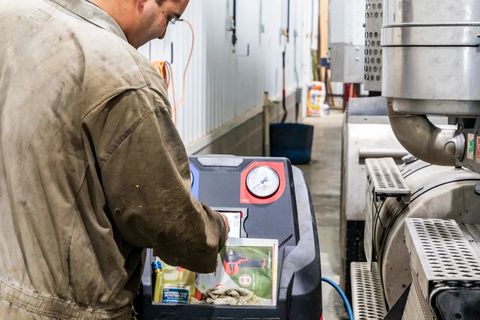
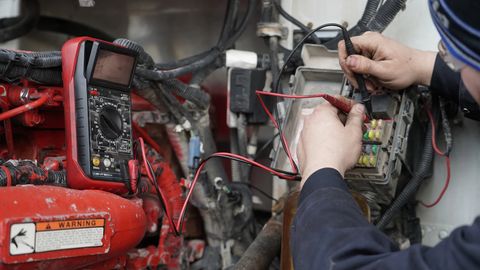
“Turbo blew on 85. They took care of getting me towed to their shop. The next day, they jumped on my 379 pete and swapped my turbo and air to air. Charged my ac and was on my way.”Benjamin Deason · Google review, Greer
“Did a great job, felt like I knew the shop guys all my life. Bunch of good guys who seemed very knowledgeable.”
“Was on the road and ran into an issue. Looked this place up and they were right down the road. Got in and out quick and back on the road.”
“Called ACME for my driver who was on the side of I-85 in Greer. The line was busy, so I moved on and called another company. The gentleman with ACME not only called me back.”
Location with a mile marker and direction, what the dash is showing, what happened immediately before the truck stopped, and whether it is loaded. Those four answers let us diagnose most of the way over the phone. Consider putting them on a card in the cab, because a driver on a shoulder at night is not at their most organized.
Yes, and you do not have to be an existing customer. Plenty of our roadside calls are trucks running through the Upstate that have never been to Greer. Those corridors and the Upstate around them, Greer, Greenville, Spartanburg, Duncan and the routes between them, are where our roadside work happens. If a truck is down well outside that area, call anyway and we will tell you honestly whether we are the right people or whether you are better served by someone closer.
Our regular hours are Monday through Friday, eight to five, with after hours by arrangement. We say that plainly rather than advertising coverage we cannot always keep. If overnight support matters to how your fleet runs, talk to us about it before you need it and we will tell you what we can commit to.
We do not run recovery equipment ourselves, but we arrange the tow and bill it as part of the repair. One call, one invoice. The more useful thing we do first is tell you accurately whether the truck needs one and what is actually wrong with it, so it gets towed to the right place once rather than to the nearest place twice.
In the shop or in your yard. Same straight answers either way.
Mon to Fri, 8am to 5pm. After hours by arrangement.
Mobile trucks and roadside cover the Upstate. Dedicated on-yard technicians work anywhere in the Southeast.
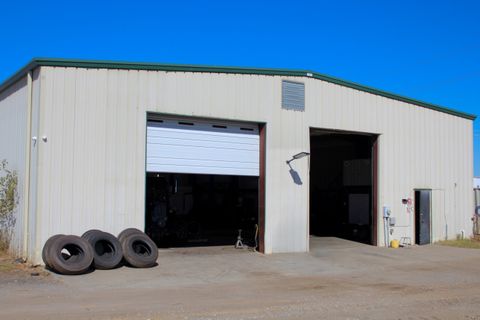
Call the shop or send the request. You'll get the diagnosis straight and a number before we start.