Benjamin DeasonOwner-operator
★★★★★
“Did a great job, felt like I knew the shop guys all my life. Bunch of good guys who seemed very knowledgeable.”
2024
Exhaust and Turbo
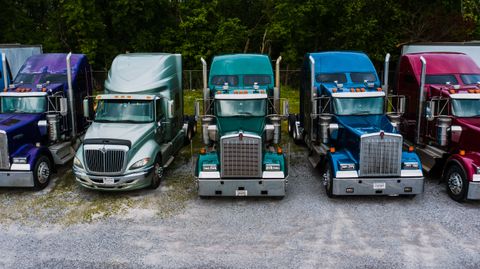
At five trucks you can keep the maintenance in your head. At twenty you cannot, and most fleets find that out the hard way. Services get booked one truck at a time, by whoever noticed, at whichever shop had an opening. Nobody owns the schedule, so the schedule becomes whatever the week allows. Then two units come due in the same month you are short a driver, and the maintenance you meant to do becomes the breakdown you did not plan. A program is how that stops.
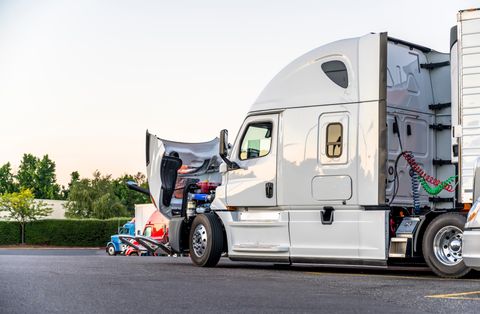
The fleets this fits best run somewhere between ten and fifty units and have outgrown ad hoc scheduling without having a full maintenance department to replace it with. Usually there is one person carrying it, often alongside dispatch or safety or both, and the maintenance is losing that competition.
It also fits fleets that have the opposite problem: plenty of process, no bandwidth. If your intervals are already defined and the trouble is getting units through them on time, the program is a scheduling and execution problem rather than a planning one, and that is easier to solve.
It works across mixed equipment, too. Most fleets this size are not running one kind of unit. There are tractors, a few straight trucks, trailers that need their own cycle, and often a piece of yard equipment nobody has a plan for. All of that goes on one calendar rather than three, because a maintenance schedule that only covers the trucks is a schedule that will get interrupted by something that was not on it.
Smaller operations are not shut out of this. If you run three trucks and want them on a real schedule, we can do that. It just does not need a program wrapped around it, and we will say so rather than sell you one.
The core of it is that somebody other than you is watching the calendar.
We set the intervals with you based on how the units actually run, not on a preset tier, then we track what is due and tell you what is coming before it is late. Each service comes back with what was checked, what was measured, what was replaced, and a list of items that are not urgent yet but will be. That deferred list is where the value sits for a fleet manager, because it converts next quarter's downtime into something you schedule instead of something that happens to you at 4:30 on a Friday.
When a unit needs more than a scheduled service, it does not disappear into a separate process. The finding, the diagnosis, and the repair stay on the same record, so a deferred item from March does not get rediscovered as a new problem in July by somebody who has never seen the truck. That continuity is most of the value, and it is the part a fleet loses every time it spreads its work across whoever had an opening.
The service itself is the same work described on our preventive maintenance page. What the program adds is continuity: the same technicians, the same notes, the same history, and a rotation that fits your operation instead of our calendar.
For fleets running enough volume to justify it, the strongest version of this is a technician who works your yard rather than visiting it.
That is the model we run for national carriers across the Southeast, and it works the same way at one yard as it does at twenty. The technician is on your site, working your units, on your schedule, during business hours. Nobody is driving trucks to a shop and nobody is waiting behind someone else's job. The units that need shop-level work get identified on the yard and sent to Greer deliberately, rather than discovered by a driver on I-85.
The threshold is simpler than it sounds. A full-time technician on your yard needs about a full week of work to justify itself, consistently, not in one busy month. Below that, scheduled on-site visits do the same job. If there is roughly a day of work waiting on your yard, that is enough to send a technician out on a set day, whether that turns out to be one day a week or one day a month. We would rather put you on the cadence your volume actually supports than sell you a person you cannot keep busy.
A maintenance program that only produces invoices is not a program, it is a vendor relationship with a schedule attached.
Customers on a fleet program get the history we hold on their units, so the trends are visible instead of remembered. Over a few cycles that history starts answering the questions that actually cost money: which units are getting expensive, which failures are repeating, which trucks are earning their keep and which ones are quietly telling you it is time to cycle them out. That conversation is worth more than any single repair on the list.
Nobody can pull a working fleet offline to get organized, so we do not ask you to.
The usual start is a baseline pass: we go through the units as they become available, document where each one actually sits, and build the schedule from what we find rather than from what the records say. Some units will be current. Some will be further behind than anyone thought. From there the rotation staggers so you are never short more than a truck or two at once, and the whole fleet is on interval within a cycle or two rather than in one painful month. Annual inspections get folded into the same calendar, since a unit that is already down for service is the cheapest place to handle its DOT inspection.
There is no standard program document, because there is no standard program. Scope, cadence, and terms get built customer to customer around what your fleet actually runs and what you are trying to fix. Tell us what you want committed in writing and we will tell you plainly what we can commit to.
We diagnose it.
You hear what we found.
You approve it.
We do the work.
Pricing on request, and references from fleets your size. What you will not get is a number you did not approve.
The work that usually rides along with this one.


“Turbo blew on 85. They took care of getting me towed to their shop. The next day, they jumped on my 379 pete and swapped my turbo and air to air. Charged my ac and was on my way.”Benjamin Deason · Google review, Greer
“Did a great job, felt like I knew the shop guys all my life. Bunch of good guys who seemed very knowledgeable.”
“Was on the road and ran into an issue. Looked this place up and they were right down the road. Got in and out quick and back on the road.”
“Called ACME for my driver who was on the side of I-85 in Greer. The line was busy, so I moved on and called another company. The gentleman with ACME not only called me back.”
Most of the fleets this serves well run ten to fifty units, but the number that matters is hours of work rather than units. Roughly a day of work on your yard justifies a scheduled on-site visit. A full week of work, consistently, justifies a dedicated technician. Under that, it comes down to whether anyone owns the schedule. If maintenance is currently being booked by whoever noticed the truck was due, a program helps at eight units. If you already have a maintenance coordinator and solid records, it may not add much until you are considerably larger.
There is no off-the-shelf program to sign into. We build the plan customer to customer, so the scope, the cadence, and anything committed in writing are part of the conversation rather than a form you fill out. If you need specific commitments documented, ask for them and we will tell you straight which ones we can make and which ones we cannot.
Yes, where the volume supports it. That is the model we run for national carriers across the Southeast, and it scales down to a single yard. On-yard work runs during business hours. If your volume is not there yet, scheduled visits get you most of the benefit without the commitment on either side.
That is a common way to start and we are fine with it. Plenty of fleets keep an existing relationship for heavy work and move their scheduled maintenance and inspections to us because that is the part that keeps slipping. If the deferred items we find start coming back to us too, that is your call to make later, not a condition of starting.
In the shop or in your yard. Same straight answers either way.
Mon to Fri, 8am to 5pm. After hours by arrangement.
Mobile trucks and roadside cover the Upstate. Dedicated on-yard technicians work anywhere in the Southeast.
Call the shop or send the request. You'll get the diagnosis straight and a number before we start.