Benjamin DeasonOwner-operator
★★★★★
“Did a great job, felt like I knew the shop guys all my life. Bunch of good guys who seemed very knowledgeable.”
2024
Exhaust and Turbo
Air conditioning is the repair fleets defer the longest and regret the fastest. A truck with no cold air is completely legal, runs perfectly, and generates no fault anyone has to act on, so it goes to the bottom of the list behind everything that stops a wheel. Then it is 96 degrees in July in South Carolina, a driver has spent nine hours in a cab that will not cool, and the conversation stops being about a repair. Good drivers have options, and this is the kind of thing they remember when somebody calls them.
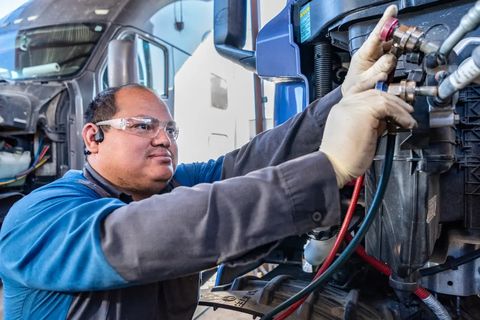
The whole system, cooling and heating both. Compressors, clutches and the belts driving them. Condensers, evaporators, expansion valves and receiver driers. Hoses, lines, fittings and the o-rings and seals that are the most common leak points on a truck. Blower motors, resistors and speed controls. Cab air filters, which are ignored constantly and which quietly destroy airflow. Controls, blend doors and their actuators, which produce the complaint where the air is cold but never reaches the driver. Heater cores and heating side faults, which matter in January for exactly the same reason.
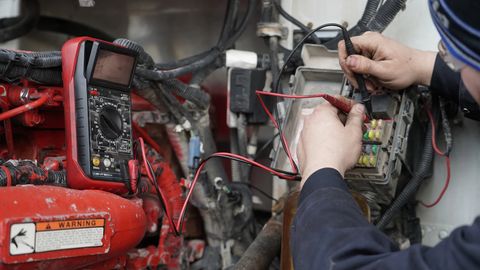
And the electrical side, which is where a surprising share of no-cool complaints actually live. Clutch circuits, pressure switches, relays and grounds cause faults that look like refrigerant problems and get treated like refrigerant problems, expensively. That work crosses directly into electrical diagnostics.
This covers more than the dash vents. We service bunk and sleeper air conditioning and APU systems as well as chassis air conditioning, which matters if your drivers sleep in the truck, because a bunk system that has quit is a driver who is not resting properly and a truck that idles all night to compensate.
This is the most useful thing on this page, so it is worth saying plainly. Refrigerant is not consumed. It does not get used up, wear out, or need topping up on a schedule.
If a system is low, it leaked. That is the only way refrigerant leaves a sealed system. So a recharge without finding the leak is not a repair, it is a countdown, and the fleet pays for it again in a few months while the compressor runs low on the oil that circulates with the refrigerant. That last part is what turns a small leak into a large bill: a system run undercharged starves the compressor of lubrication, and a compressor that fails puts debris through the entire system, which then has to be flushed or replaced rather than repaired.
So we find leaks. Every recharge follows a diagnosis, and if a truck has been recharged twice already, we would rather find out why than sell you a third.
A significant number of no-cool complaints have nothing to do with the refrigerant circuit.
A cab air filter nobody has changed can cut airflow to almost nothing, and the driver reports weak air conditioning. A blend door actuator that has failed sends air the wrong way regardless of how cold the system is making it. A blower resistor failure leaves you with one speed. A condenser packed with road debris cannot shed heat, which looks like an undercharged system on a hot day. And an engine that is running warmer than it should makes the whole cab situation worse, which puts this in the same conversation as cooling systems.
Working through those first is faster and cheaper than opening the refrigerant circuit, and it is the order a good diagnosis follows.
Heating gets forgotten in this conversation and should not. The same system, the same blend doors and the same blower deliver heat in January, and a driver with no defrost is both uncomfortable and unable to see properly, which is a safety issue rather than a comfort one. A heater core that has started weeping also puts coolant into the cab, which is a smell drivers notice long before anybody diagnoses it. If you are running the fleet through an AC check in the spring, checking the heating side at the same time costs nothing extra.
Most of this travels. Diagnosis, leak detection, recharging, compressor and clutch work, blower motors, cab filters, controls, hoses and fittings are all things our technicians do on customer yards, and for a fleet the sensible move is to run the whole group through an AC check in the spring rather than handling them one at a time in July.
The shop handles evaporator and heater core work, which means the dash coming apart, and any system that needs flushing after a compressor failure. Those are long jobs and they are much better done on a lift than in a parking lot.
Start with the compressor, because that is the mechanical cost. Every month a system runs low is a month the compressor runs short on lubrication, and the difference between fixing a leaking o-ring and replacing a compressor plus flushing the system is substantial.
Then the fuel, which nobody counts. A driver in a cab that will not cool runs with windows down at highway speed or idles to get relief, and idling to stay comfortable is expensive across a fleet and a summer.
Then the part that actually matters. Drivers tolerate a lot, and they do not tolerate this. A cab that will not cool in a Carolina August, on a truck where the fleet has been told twice, is a resignation with a delay on it. Replacing a driver costs vastly more than a compressor, and unlike a compressor, you cannot schedule it.
We diagnose it.
You hear what we found.
You approve it.
We do the work.
Pricing on request, and references from fleets your size. What you will not get is a number you did not approve.
Symptoms often start one system over. If the diagnosis points there, these are the usual suspects.
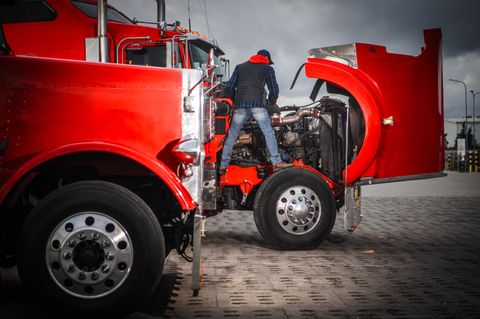
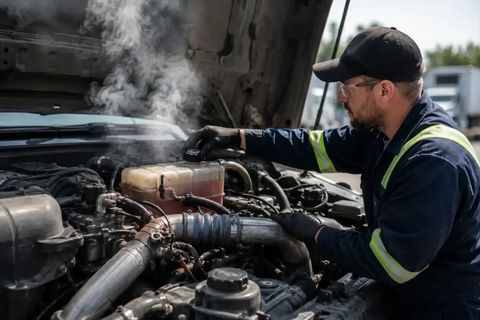
“Turbo blew on 85. They took care of getting me towed to their shop. The next day, they jumped on my 379 pete and swapped my turbo and air to air. Charged my ac and was on my way.”Benjamin Deason · Google review, Greer
“Did a great job, felt like I knew the shop guys all my life. Bunch of good guys who seemed very knowledgeable.”
“Was on the road and ran into an issue. Looked this place up and they were right down the road. Got in and out quick and back on the road.”
“Called ACME for my driver who was on the side of I-85 in Greer. The line was busy, so I moved on and called another company. The gentleman with ACME not only called me back.”
We can, but it is worth understanding what that buys. Refrigerant is not consumed, so if a system is low, it leaked, and a recharge without finding the leak means paying for it again in a few months while the compressor runs short on lubrication in the meantime. We would rather find the leak and fix it once.
Usually airflow across the condenser: a fan clutch not engaging, a condenser blocked with debris, or a cooling system that is not shedding heat properly at low speed. It can also be an undercharged system that only shows the symptom when conditions get harder. Either way, the pattern is useful, so tell us about it.
Most of it, yes. Diagnosis, leak detection, recharge, compressor and clutch work, blower motors, cab filters and controls all happen on site. Evaporator and heater core work needs the dash apart and belongs in Greer. For a fleet, running the whole group through an AC check in spring beats handling them individually in July.
Spring, before you need it. Testing a system in April turns a repair into a scheduled job with parts available and no urgency. Testing it in July means a truck out of service in the week when a driver in a hot cab has the least patience, which is precisely when this stops being about the truck.
In the shop or in your yard. Same straight answers either way.
Mon to Fri, 8am to 5pm. After hours by arrangement.
Mobile trucks and roadside cover the Upstate. Dedicated on-yard technicians work anywhere in the Southeast.
Call the shop or send the request. You'll get the diagnosis straight and a number before we start.