Benjamin DeasonOwner-operator
★★★★★
“Did a great job, felt like I knew the shop guys all my life. Bunch of good guys who seemed very knowledgeable.”
2024
Exhaust and Turbo
When a truck breaks down, freight is late. When a bus breaks down, people are standing somewhere waiting, and everyone finds out immediately. That changes the entire calculation around maintenance. A bus operation cannot absorb a surprise the way a freight fleet can, because there is no version of a missed run that stays internal, and there is rarely a spare unit sitting idle to swap in.
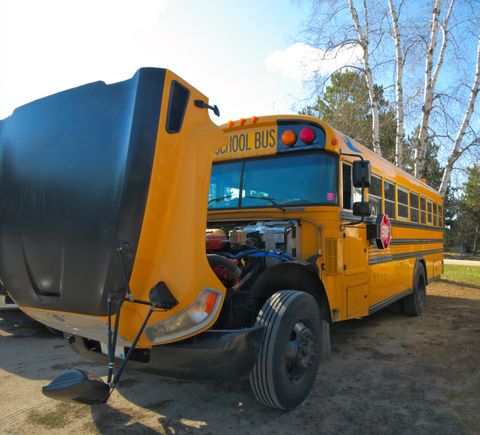
The chassis and drivetrain, which is where most of a bus is a truck. Diesel engines and their diagnosis. Air brakes, including the full range of work described on our brakes page. Air systems, which on a bus run more than the brakes. Cooling systems, which work harder on a vehicle that spends time at low speed with a full load of people. Electrical and charging, lighting, suspension including air ride and its height control, steering, and driveline.
Then the parts of a bus that are still ours but behave differently from a truck: kneeling suspension and the air system feeding it, and passenger climate control, which is a considerably larger system than a truck cab's and fails in ways everyone aboard notices immediately.
We have history across the range: shuttle and hotel buses, church buses, motorcoaches, transit contractors and school buses. What varies is not the vehicle so much as the operation around it, and the maintenance conversation looks different for a charter fleet than for a shuttle running the same eight miles all day.
Two things are not ours, and it is better to say so here than after you book. We do not service wheelchair lifts, and we do not work on passenger door mechanisms. Both are specialist systems with their own safety requirements, and a bus operator is better served by somebody who does nothing else with them.
A loaded coach is a heavy vehicle, and the load arrives and leaves several times a day rather than once a week. That cycling shows up in specific places.
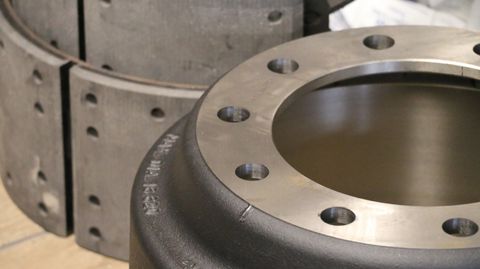
Brakes see more applications per mile than a highway tractor does, particularly on shuttle and transit work where the vehicle stops constantly. Air systems work harder because the doors, the kneeling function and the suspension are all drawing on the same supply that the brakes need, so a leak that a truck would tolerate becomes a real problem on a bus. Suspension and its height control take a beating from the load cycling, and a kneeling system that has stopped working properly is both a service issue and an accessibility one.
None of that is exotic work. It is the same air, brake and suspension service we do on trucks, run at a frequency that matches how a bus is actually used rather than how far it travels. The mileage on a shuttle bus badly understates what has happened to it.
On a truck, air conditioning is a driver retention issue. On a bus, it is the service itself.
A coach with no cool air in a South Carolina July is not a vehicle with a fault, it is a complaint from every person on it, and depending on who you carry it can be a genuine safety issue rather than an inconvenience. These systems are larger than a truck's, they have more places to leak, and they get run continuously in the months when they are hardest to fix quickly.
Which is why bus HVAC should be serviced before the season rather than during it. Testing the system in April is a scheduled repair. Testing it in July is a bus out of service in the week you least want one, and it belongs on the HVAC schedule well ahead of when you need it.
Air supply deserves the same pre-season attention. On a bus the air system is not just brakes: it is also the doors, the kneeling function and the suspension, all drawing on the same supply. A leak a highway tractor would shrug off becomes a real operational problem on a vehicle that opens its doors forty times a shift, and it is one of the more common reasons a bus starts behaving oddly in ways nobody can pin down.
A bus fleet's real constraint is not the repair, it is when the vehicle is available, and the windows are narrow and non-negotiable.
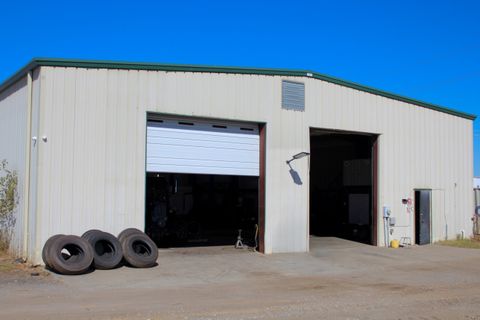
That means the maintenance has to be built around the schedule rather than the other way around. For operations with predictable downtime, whether that is a midday gap, a weekend, or a seasonal break, on-yard service during business hours puts the work where the vehicle already sits. For anything needing a lift or extended time, the shop in Greer is the right place, and scheduling it against a known quiet period is far better than discovering the need during a run.
Seasonal operations have an advantage here that most fleets do not, which is a genuine off period. Fleets that use it, working through the whole group while nothing is running, tend not to have surprises in season. Fleets that do not use it get the same repairs at the worst possible time.
There is usually no spare. That single fact drives everything.
A freight fleet with twenty tractors can absorb one being down. A bus operation with six vehicles and six assignments cannot, so a breakdown becomes a cancelled run, a scramble for a substitute, or a charter that costs more than the repair. Then there is the reputational side, which is real and hard to price. People remember the bus that did not show up.
And the safety and compliance exposure sits differently when you carry passengers. The brake, steering and suspension items that are inspection findings on a truck get looked at very differently on a vehicle full of people, and that is a reason to run ahead of the schedule rather than alongside it.
We diagnose it.
You hear what we found.
You approve it.
We do the work.
Pricing on request, and references from fleets your size. What you will not get is a number you did not approve.
The work that usually rides along with this one.
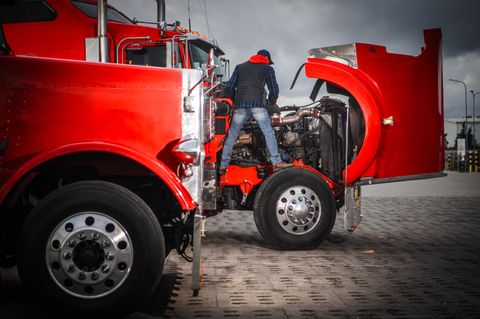
“Turbo blew on 85. They took care of getting me towed to their shop. The next day, they jumped on my 379 pete and swapped my turbo and air to air. Charged my ac and was on my way.”Benjamin Deason · Google review, Greer
“Did a great job, felt like I knew the shop guys all my life. Bunch of good guys who seemed very knowledgeable.”
“Was on the road and ran into an issue. Looked this place up and they were right down the road. Got in and out quick and back on the road.”
“Called ACME for my driver who was on the side of I-85 in Greer. The line was busy, so I moved on and called another company. The gentleman with ACME not only called me back.”
We have history across shuttle and hotel buses, church buses, motorcoaches, transit contractors and school buses. The chassis and drivetrain work is the same trade in every case. What changes is the schedule you have to fit around, which is worth talking through before anything is booked. Wheelchair lifts and passenger door mechanisms are the two systems we do not take.
Yes, for most routine work, during business hours. Scheduled maintenance, brake work, air systems, electrical and lighting all happen on site, which matters when your vehicles have narrow availability windows. Anything needing a lift or a long diagnosis is better handled in Greer against a known quiet period.
It can, but not until July. Bus climate systems are large, they have many places to leak, and a system that is weak now will be inadequate at the hottest point of the season. Testing and repairing it in the spring is a scheduled job. Doing it in midsummer is a vehicle out of service in your worst week.
In your off period, without question, and it is the biggest advantage a seasonal operation has. Working the entire fleet while nothing is running turns every repair into a planned one. Fleets that skip it end up doing the identical work in season, one vehicle at a time, at the point when a unit out of service costs the most.
In the shop or in your yard. Same straight answers either way.
Mon to Fri, 8am to 5pm. After hours by arrangement.
Mobile trucks and roadside cover the Upstate. Dedicated on-yard technicians work anywhere in the Southeast.
Call the shop or send the request. You'll get the diagnosis straight and a number before we start.