Benjamin DeasonOwner-operator
★★★★★
“Did a great job, felt like I knew the shop guys all my life. Bunch of good guys who seemed very knowledgeable.”
2024
Exhaust and Turbo
The annual inspection is the one deadline on a truck that does not move. It comes due whether the unit is loaded, whether your best driver happens to be in it, and whether you have a day to spare. Most fleets handle it the same way every year: put it off until the sticker is nearly out, send the truck somewhere, then find out what it needs with the clock already running. There is a better version of that week, and it starts with knowing what the truck will fail before it fails it.

The federal annual inspection is a defined list, not a shop's opinion. It covers the brake system, the steering mechanism, lighting devices and reflectors, tires, wheels and rims, suspension, frame, coupling devices, exhaust system, fuel system, windshield glazing, wipers, and the emergency equipment that has to be on board. Trailers get their own inspection on the same cycle.
Every item is measured against a pass or fail standard, and the standard does not care how the truck feels to drive. A brake with a pushrod stroke past the adjustment limit fails. A tire under the tread depth minimum fails. A cracked frame member fails. The inspection is not looking for what is wearing, only for what is out of spec today, which is precisely why it should never be the first look a truck gets all year.
Our technicians meet the federal qualification requirements for annual inspectors under 49 CFR 396.19, and we complete the inspection end to end: the inspection itself, the report, and the decal. You are not leaving with a list to take somewhere else for a signature.
Brakes, lights, and tires are where most units come up short, in roughly that order, and all three are things that get quietly worse for months before the day the inspection finally comes due.
Trailers are where fleets quietly lose the most ground. They get dropped, swapped, and forgotten while tractors get watched, and then a set of them comes due in the same month with lights out, reflective tape peeling, brakes nobody has measured in a year, and tires that have been carrying weight on air nobody checked. A trailer is a full inspection in its own right, and pretending otherwise is how a fleet ends up scrambling.
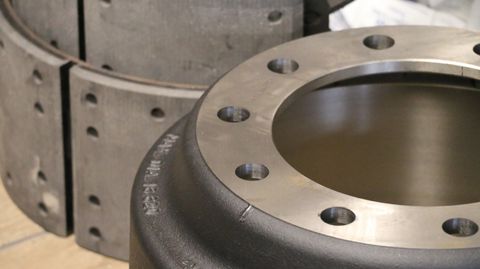
We inspect first and tell you second. Anything that fails, and anything sitting close enough to the line that it will not survive the year, comes back to you as a list before a wrench turns. You decide what gets corrected now and what you would rather schedule. If a brake is out of adjustment, the fix is usually short and it lives on the brakes side of the shop, so it does not have to become a second appointment on a different week.
What we will not do is quietly repair everything we find and hand you an invoice you did not see coming. An inspection is supposed to give you information. If it only ever gives you a bill, it is not doing the job it exists to do.
Both work, and which one is right usually comes down to how many units you are running through.
For fleets, on-yard inspections are the practical answer. A technician comes to where the units already sit and works through them in the order your dispatch can live with, so no truck loses a day to travel plus a shop queue. On-yard work runs during business hours, so we build the rotation around which units you can spare on which days. On call means a real technician answers, not a dispatch queue. You will know who is coming and when they are working before you hang up.
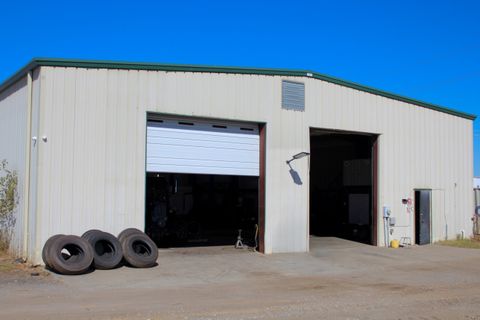
The shop in Greer is the better choice when a unit is likely to need real correction, when it needs a lift to inspect properly, or when the truck is already coming in for other work. If a unit is due for its annual and due for service, doing both in one visit is one day of downtime instead of two, and that is usually worth scheduling around.
The annual is a snapshot. It tells you whether a truck is legal on one day. It does not tell you what that truck needs next month.
Fleets that only inspect once a year are, in effect, finding every problem at the worst possible time, which is the day a federal standard is being applied. Fleets that run a real preventive maintenance schedule walk into the annual already knowing the answer, because the items that fail an inspection are the same items a technician measures on every scheduled pass. The inspection stops being a test and becomes paperwork. That is the whole goal.
The inspection is not finished when the sticker goes on. The motor carrier has to keep the inspection report, and it has to be produced when somebody asks for it.
You get the completed report for every unit we inspect, in a form you can file. Keep it for at least fourteen months from the inspection date, which is the federal retention requirement, and keep it somewhere an auditor can find it rather than somewhere a driver put it. A truck that passed and a truck that can prove it passed are two different things during an audit, and only one of them helps you.
We diagnose it.
You hear what we found.
You approve it.
We do the work.
Pricing on request, and references from fleets your size. What you will not get is a number you did not approve.
The work that usually rides along with this one.
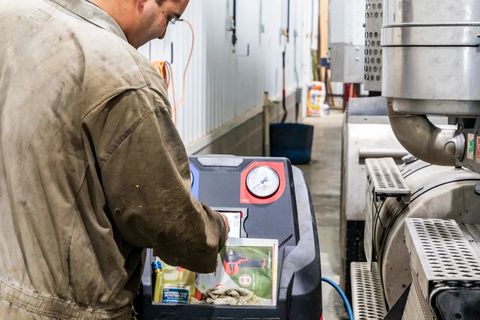

“Turbo blew on 85. They took care of getting me towed to their shop. The next day, they jumped on my 379 pete and swapped my turbo and air to air. Charged my ac and was on my way.”Benjamin Deason · Google review, Greer
“Did a great job, felt like I knew the shop guys all my life. Bunch of good guys who seemed very knowledgeable.”
“Was on the road and ran into an issue. Looked this place up and they were right down the road. Got in and out quick and back on the road.”
“Called ACME for my driver who was on the side of I-85 in Greer. The line was busy, so I moved on and called another company. The gentleman with ACME not only called me back.”
Once every twelve months for every commercial vehicle you operate, tractors and trailers both, each on its own cycle. That is the federal minimum and it is separate from your daily driver vehicle inspection reports and from anything a roadside inspector does. Most fleets that run trouble-free do it on a fixed month per unit so the due dates spread across the year instead of stacking up.
We can correct it in the same visit in most cases, and you approve the work before it happens. That is the practical reason to inspect somewhere that also does the repairs. An inspection at a place that can only inspect leaves you holding a list, a failed unit, and a second appointment to book.
Yes, and for a fleet that is usually the right call. Our technicians work through units on the yard during business hours on a schedule you set. It removes the travel time and the shop queue from every unit, which on twenty trucks is a real number. Units likely to need heavier correction are better brought to Greer.
You get the completed inspection report for each unit. The carrier is required to retain it for fourteen months from the inspection date and to make it available on request. Keep the originals filed by unit number rather than by date, because when somebody asks for one they will ask by truck, not by month.
In the shop or in your yard. Same straight answers either way.
Mon to Fri, 8am to 5pm. After hours by arrangement.
Mobile trucks and roadside cover the Upstate. Dedicated on-yard technicians work anywhere in the Southeast.
Call the shop or send the request. You'll get the diagnosis straight and a number before we start.