Benjamin DeasonOwner-operator
★★★★★
“Did a great job, felt like I knew the shop guys all my life. Bunch of good guys who seemed very knowledgeable.”
2024
Exhaust and Turbo
Brakes are the repair nobody argues about until they cost you a truck. A driver calls in a soft pedal. An inspector chalks a shoe out of adjustment and a unit goes out of service on the shoulder. A wheel end comes back hot. Brake defects are the most common reason a truck fails a roadside inspection, and they are the fastest way for a clean CSA score to go bad. When yours need work, you want it found once and fixed right.
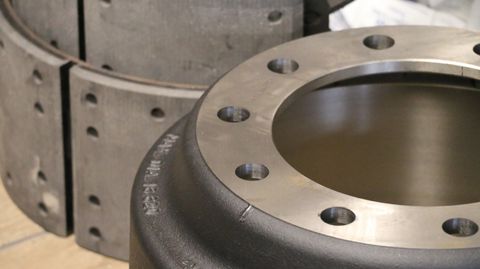
Most of what we do is air drum work on Class 6 through 8 tractors and trailers: linings and shoes, drums, S-cam shafts and bushings, camshaft tubes, slack adjusters, brake chambers and spring brakes, hardware kits, and the air lines and fittings that feed all of it. Wheel seals and bearings get inspected on every job, because a seal weeping oil onto a fresh set of linings turns a good brake job into a comeback inside a month.
We service air disc brakes as well, which show up on more of the newer spec coming through the shop, and we handle ABS wheel speed sensors and the wiring that runs to them, which is where a lot of ABS lamps actually live rather than in the brakes themselves.
On drums, we replace rather than turn. Machining takes material off a part that is already measured against a discard diameter, and on a truck heading back into the same duty cycle it usually buys a shorter interval instead of a cheaper repair. If a drum is done, it is done.
Trailers count. A tractor with perfect brakes hooked to a trailer doing none of the work is still a truck that will not stop right, and it is still a violation. If you bring us a tractor with a chronic complaint, tell us about the trailer it pulls.
A brake complaint is a symptom. Worn linings are usually the last thing in the chain, not the first.
A wheel that runs hot is often a chamber that is not fully releasing, or an S-cam seized in its bushings. A truck that pulls under braking is one corner doing more than its share. A pedal that feels long is frequently an air problem rather than a friction problem, and if the system is leaking down overnight then the brakes are only where the symptom showed up. That work lives in the air systems, and we rule it out before we sell you shoes.
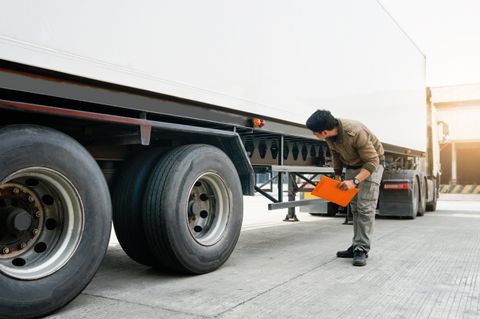
So we measure. Lining thickness at the thinnest point. Drum diameter against the discard spec. Pushrod stroke at each chamber against the adjuster's limit. Seal and hardware condition behind the shoe. Then you get told what we found in plain language before anything is ordered. If two axles need it and two do not, we say that. Selling a fleet eight wheel ends when it needed four is how a shop gets one job and never a second.
Brakes are one of the things we do both ways, and where the work happens should come down to what the truck needs and how much time you have.
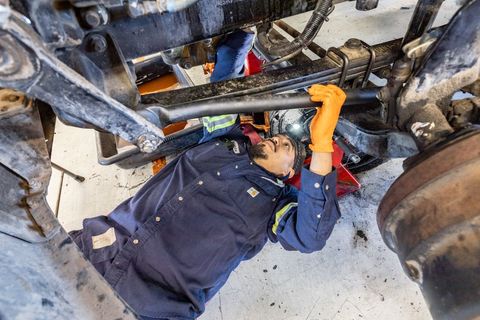
On your yard or on the road, our technicians handle adjustments, chamber and slack adjuster replacement, air line repair, and wheel end relines where the site and the weather allow it. If you run a yard where units cycle through on a schedule, brakes get measured as part of the regular pass instead of waiting for a driver to complain. On call means a real technician answers, not a dispatch queue. You will know who is coming and where they are working before you hang up.
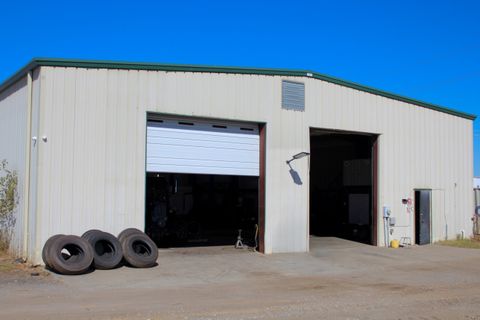
In the shop in Greer we take the work a yard is a bad place for: hub and bearing service, seal replacement, anything that needs the wheel end fully apart and clean, and anything on a unit that is already down for other work. If a truck is coming in for brakes anyway, it is usually worth pulling the rest of its inspection forward the same day so you spend one day of downtime instead of two.
Brake violations are not only a repair problem. They are the largest category of out-of-service violations written at roadside, and they carry weight in the Vehicle Maintenance BASIC that your insurer and your shippers can see. One unit parked for an out-of-adjustment slack is a driver sitting, a load late, and a mark against the DOT number long after the truck is fixed.
That is why we treat brakes and inspections as the same conversation. When a unit is in for a reline, the rest of the DOT inspection checklist is already right there in front of the technician. Finding a brake defect the week before an inspection is a repair. Finding it after is a repair plus a violation plus a tow.
A set of linings is the cheapest part of this entire conversation. What it turns into when it waits is not.
Linings run to the rivets and take the drum with them, so a reline becomes a reline plus drums. A weeping wheel seal soaks a fresh set of shoes and you buy them twice. An S-cam that would have freed up with service in the spring becomes a camshaft, bushings, and a wheel end apart in January. A truck that fails at roadside is a tow, a driver waiting, a customer calling about a load, and a repair you now have to buy somewhere you did not choose, from a shop you did not pick.
None of that is an argument for spending more. It is an argument for finding out what a wheel end needs while the truck is standing still in a place you control.
We diagnose it.
You hear what we found.
You approve it.
We do the work.
Pricing on request, and references from fleets your size. What you will not get is a number you did not approve.
Symptoms often start one system over. If the diagnosis points there, these are the usual suspects.
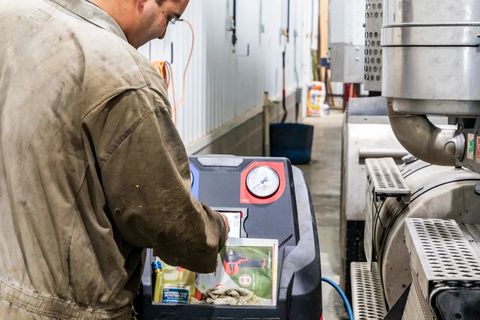
“Turbo blew on 85. They took care of getting me towed to their shop. The next day, they jumped on my 379 pete and swapped my turbo and air to air. Charged my ac and was on my way.”Benjamin Deason · Google review, Greer
“Did a great job, felt like I knew the shop guys all my life. Bunch of good guys who seemed very knowledgeable.”
“Was on the road and ran into an issue. Looked this place up and they were right down the road. Got in and out quick and back on the road.”
“Called ACME for my driver who was on the side of I-85 in Greer. The line was busy, so I moved on and called another company. The gentleman with ACME not only called me back.”
Usually you do not, until somebody measures. The reliable check is pushrod stroke: with the system at full pressure and the brakes applied, each chamber's pushrod has a maximum travel, and past that limit the brake is legally out of adjustment. A driver can catch the warning signs, a longer pedal, a truck that pulls, a wheel running hot, but the measurement is the actual answer.
Most of it we can do on your yard. Adjustments, chambers, slack adjusters, air line repair, and wheel end relines are all work our technicians do on site when conditions allow. Hub and bearing service, seal replacement, and anything needing the wheel end fully apart and clean is better in Greer. Tell us what the truck is doing and we will tell you which one it is.
Yes. Trailer brakes are half the stopping system, and they are where neglected wheel ends tend to hide, because trailers get dropped and forgotten while tractors get watched. We service tractor and trailer brakes. If you are bringing in a tractor with a chronic braking complaint, we would rather look at the trailer behind it than guess.
It is not an emergency, but it is not nothing either. An ABS lamp means the system has faulted and is not doing its job, which matters most on wet pavement and in a hard stop, and it is a citable defect at roadside. It is usually a wheel speed sensor or the wiring to it rather than the brakes themselves, which makes it a small fix when it is found early.
In the shop or in your yard. Same straight answers either way.
Mon to Fri, 8am to 5pm. After hours by arrangement.
Mobile trucks and roadside cover the Upstate. Dedicated on-yard technicians work anywhere in the Southeast.
Call the shop or send the request. You'll get the diagnosis straight and a number before we start.