Benjamin DeasonOwner-operator
★★★★★
“Did a great job, felt like I knew the shop guys all my life. Bunch of good guys who seemed very knowledgeable.”
2024
Exhaust and Turbo
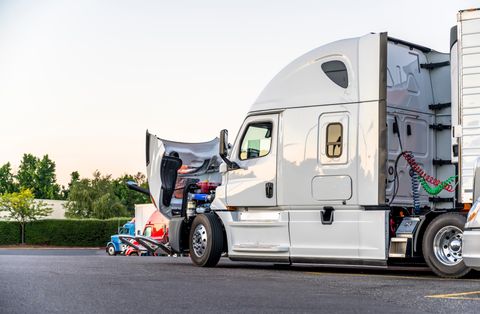
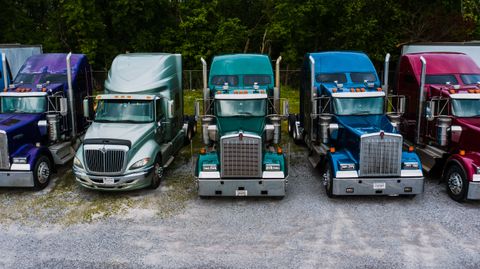
Every truck you send to a shop costs you more than the repair. It costs the drive there, the drive back, the driver doing neither of those things productively, and however long the unit sits in somebody else's queue behind somebody else's job. For a lot of the work a fleet actually needs, none of that is necessary. The truck is already parked. The parts are not the problem. What is missing is a technician standing next to it.
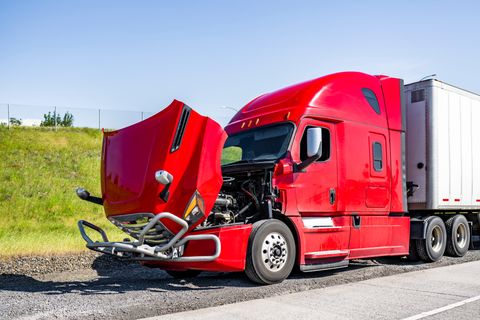
More than most fleets expect. Scheduled maintenance is the backbone of it, the full service described on our preventive maintenance page, done where your units already sit. From there it extends into most of what a working fleet needs week to week.
Brake work, including adjustments, chambers, slack adjusters, and wheel end relines where the site allows. Air system leak testing and line repair. Tire service. Lighting and wiring repair. Sensor and connector work. Batteries, cables, and charging system problems. Aftertreatment diagnosis and the DEF system work that goes with it. Filter and fluid service. Trailer work, including brakes, lights, and the air lines that get dragged through gravel for a living.
Diagnosis travels well too, which is the part fleets underuse. A technician with time and the truck in front of them can tell you what is actually wrong without the unit ever leaving your property. Sometimes the answer is a repair done on the spot. Sometimes it is a decision you now get to make on your schedule instead of somebody else's.
Our trucks carry the common wear items and the tooling a road fix actually takes, which is the difference between a technician who diagnoses your problem and one who fixes it the same afternoon. Not everything can ride on a service truck, and we will tell you when a part has to be ordered rather than letting you find out at the end of the day.
Some work does not get better because you did it in a parking lot. We would rather tell you that up front than discover it halfway through.
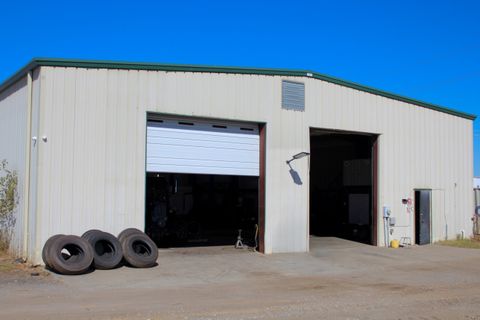
Anything needing a lift for an extended period, internal engine work, transmission and clutch replacement, compressor replacement, and any repair where the truck has to come apart further than a yard can safely support belongs in Greer. Weather is a real factor too. There is work we will not do well outdoors in February, and doing it badly to avoid a tow is not a favor to anyone.
The advantage of running both is that the handoff is not a handoff. A technician who found the problem on your yard is not writing a description of it for a stranger. The unit arrives in Greer with the diagnosis already done and the parts already coming.
On call across the Upstate. You call, a real technician answers, and a truck is dispatched to your location. This is the model for fleets that need help when something comes up rather than on a fixed schedule. On call means exactly that: a technician, not a dispatch queue, and you will know who is coming and where they are working before you hang up. If a unit is down on the road rather than on your property, that is roadside assistance and it works a little differently.
A dedicated technician on your yard. For fleets with enough consistent work, we place a technician on your site rather than sending one out per call. That is the model we run for national carriers across the Southeast, and it scales down to one yard. Roughly a day of work on your property justifies a scheduled visit. A full week of work, consistently, justifies a dedicated technician. On-yard work runs during business hours.
One more thing worth saying about the split: it is not permanent. Plenty of fleets start with us on the yard for scheduled work and keep an existing relationship for heavy repairs, and that is a fine place to be. What tends to happen over time is that the deferred items found on the yard follow the technician who found them, because the diagnosis is already done and nobody wants to explain it twice.
Fleets underestimate this because it never lands on a repair order.
A truck going to a shop for a two hour job is rarely gone for two hours. There is the trip out, the wait, the trip back, and a driver who spent a shift on none of the work you are paying them for. On a single unit it is an annoyance. Across twenty units on a maintenance cycle it is a meaningful number of shifts a year spent moving trucks between parking lots.
There is a second cost that is harder to see. When getting a truck looked at is inconvenient, small problems do not get looked at. The wet seal, the marginal brake, the connector that has started acting up: they all wait, because none of them is worth the trip. Then they stop waiting. Removing the trip is what keeps those from becoming the reason a unit is on a shoulder.
You tell us what the truck is doing, where it is, and whether it is loaded. We tell you what we think it is, whether it is something we can handle on your yard, and who is coming.
If it turns out to be bigger than a yard job, you hear that before a technician spends a day proving it, not after. And if we get there and find something different than what was described on the phone, you get called with what we found before the work changes. Nobody likes surprises less than the person who has to explain them to their own customer.
We diagnose it.
You hear what we found.
You approve it.
We do the work.
Pricing on request, and references from fleets your size. What you will not get is a number you did not approve.
The work that usually rides along with this one.
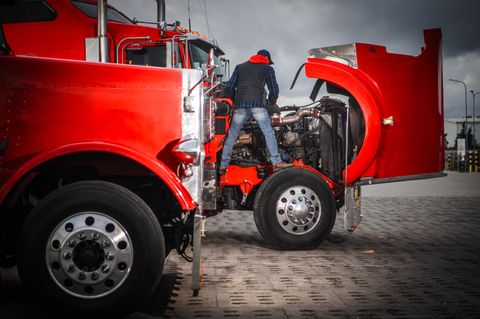
“Turbo blew on 85. They took care of getting me towed to their shop. The next day, they jumped on my 379 pete and swapped my turbo and air to air. Charged my ac and was on my way.”Benjamin Deason · Google review, Greer
“Did a great job, felt like I knew the shop guys all my life. Bunch of good guys who seemed very knowledgeable.”
“Was on the road and ran into an issue. Looked this place up and they were right down the road. Got in and out quick and back on the road.”
“Called ACME for my driver who was on the side of I-85 in Greer. The line was busy, so I moved on and called another company. The gentleman with ACME not only called me back.”
On-call mobile work runs across the Upstate, which for us means Greer, Greenville, Spartanburg, Duncan and the corridors between them. Dedicated on-yard technicians work across the Southeast, because that is a placement rather than a dispatch. If you are outside the Upstate and want scheduled on-site work, ask. The answer depends on volume more than on distance.
A mobile technician carries what the job was described as needing plus the common wear items that go with it. A mobile technician carries the common wear items and the tools a roadside or on-yard fix requires, so most jobs finish in one visit. A repair that turns out to be something other than what was described can mean ordering a part, and you will hear that as soon as we know rather than at the end of the day.
On-yard work runs during business hours. The practical answer for most fleets is not night work, it is rotation: we take the units you can spare on a given day and work through the fleet across the week or the month, so you are never short more than a truck or two at a time.
The repair is the repair. What changes is what surrounds it, and for most scheduled and routine work the drive, the wait, and the lost shift cost a fleet more than the visit does. For heavy work needing a lift, the shop is genuinely cheaper. We will tell you which one you are looking at rather than defaulting to whichever is easier for us.
In the shop or in your yard. Same straight answers either way.
Mon to Fri, 8am to 5pm. After hours by arrangement.
Mobile trucks and roadside cover the Upstate. Dedicated on-yard technicians work anywhere in the Southeast.
Call the shop or send the request. You'll get the diagnosis straight and a number before we start.