Benjamin DeasonOwner-operator
★★★★★
“Did a great job, felt like I knew the shop guys all my life. Bunch of good guys who seemed very knowledgeable.”
2024
Exhaust and Turbo
You know the truck. It has had three batteries in two years. Something on the dash comes on when it rains. A light works until you hit a bump. Every shop that has looked at it replaced something plausible and sent it back, and the fleet has quietly written the unit off as difficult. It is not difficult. It has an electrical fault nobody has been paid to find properly, and that is a different thing entirely.
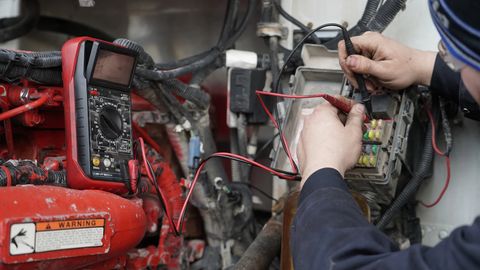
Because it is the only work in this trade where the answer is frequently not a part.
A mechanical failure shows you something: worn, cracked, leaking, out of spec. An electrical fault shows you a symptom at one end of a circuit and hides its cause anywhere along it. The corrosion is inside a connector. The chafe is under a loom against a frame rail. The bad ground looks perfect and reads fine until there is current on it. None of that is visible, and none of it can be found by replacing the component the code named.
So most shops replace the named part, which sometimes works and often does not, and the truck comes back. What actually finds these is a technician willing to test the circuit rather than the component, and time booked honestly to do it. That is the same method described on our diagnostics page, applied to the part of the truck where it matters most.
Charging and starting systems, including alternators, starters, batteries, cables and terminals. Grounds, which cause more problems than any other single item and get checked least. Wiring harness damage, chafe, and connector repair. Lighting throughout the tractor and trailer, including the seven-way and the trailer cord that lives its life in road spray. Sensor and module wiring. Instrument and dash faults. Accessory circuits, fans, and the electrical side of the HVAC system, which is where most no-cool complaints actually originate. Trailer lighting faults, which are among the most common reasons a unit gets pulled at roadside.
Trailer wiring is worth calling out separately because fleets consistently underinvest in it. A trailer cord spends its whole life in road spray, salt and vibration, and the connections at both ends corrode on a schedule. Lighting violations are among the most common things written at roadside, and they are among the cheapest to prevent. Running a batch of trailers through a lighting and connector check in one visit is the single best return on an on-yard hour we can think of.
Batteries deserve their own note. A truck that keeps killing batteries almost never has a battery problem. It has a charging fault, a parasitic draw, a cable or terminal problem, or a ground issue, and the batteries are the thing paying for it. Replacing them again is buying the same repair a third time.
Three things worth stating plainly, because fleets with a problem truck ask about all of them. We do module programming and parameter changes. Starters and alternators we replace rather than rebuild, because a rebuilt one on a working truck is a repeat visit waiting to happen. And when a harness is far enough gone that section repair is only postponing the argument, we can replace it outright. On a unit with a chronic electrical history, that is sometimes the only honest answer left.
The hardest ones only happen sometimes, and the shop that says "we could not duplicate it" is telling you they did not have a method.
Duplicating the fault is the work. That means loading the circuit and testing under conditions that match when it fails: cold, hot, wet, vibrating, loaded. Voltage drop testing under load finds resistance that reads perfectly on a static check, which is why so many intermittent faults get missed by a meter used the easy way. Wiggle testing along a harness while watching live values is unglamorous and it finds a great deal.
What we need from you is information rather than patience. When it happens, what the weather was doing, whether the truck was loaded, whether it had just started or had been running for hours. A driver's offhand comment that it only does it in the morning is often the single most valuable piece of the diagnosis.
Most electrical work travels well. Batteries, cables, terminals, charging system testing, lighting, trailer cords and connector repair are all things our technicians do on customer yards routinely, and electrical faults are one of the more common reasons we get a roadside assistance call, because a truck with a dead charging system stops wherever it happens to be.
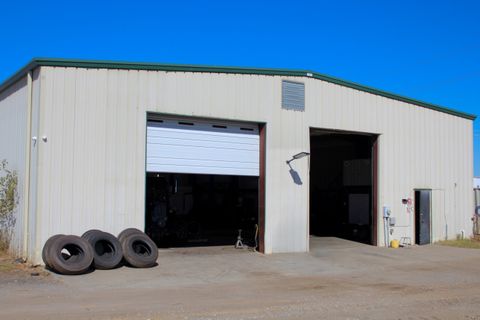
The shop is better for a long chase. When a fault needs hours of methodical testing, or the harness needs to be opened up along its length, doing it in Greer costs less than doing it twice in a parking lot.
Look at the trucks in your fleet that have had the most repeat visits. There is usually an electrical one in the list.
The direct cost is the parts bought repeatedly: batteries, alternators, starters, sometimes the same sensor twice. The bigger cost is that the unit becomes unreliable in a way that is hard to plan around, which means it gets assigned to shorter runs, or to whoever complains least, or it simply gets avoided. Drivers learn which trucks do strange things and they stop reporting the small ones, which means the next fault gets found by a roadside inspector or by the side of the road.
Finding it once ends all of that. It is usually a much smaller repair than the sum of what has already been spent trying to avoid it.
We diagnose it.
You hear what we found.
You approve it.
We do the work.
Pricing on request, and references from fleets your size. What you will not get is a number you did not approve.
Symptoms often start one system over. If the diagnosis points there, these are the usual suspects.

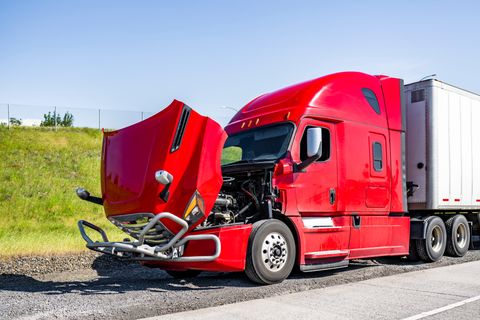
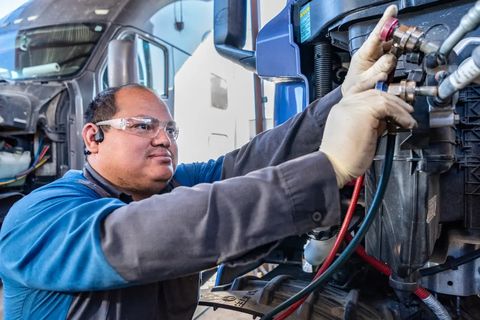
“Turbo blew on 85. They took care of getting me towed to their shop. The next day, they jumped on my 379 pete and swapped my turbo and air to air. Charged my ac and was on my way.”Benjamin Deason · Google review, Greer
“Did a great job, felt like I knew the shop guys all my life. Bunch of good guys who seemed very knowledgeable.”
“Was on the road and ran into an issue. Looked this place up and they were right down the road. Got in and out quick and back on the road.”
“Called ACME for my driver who was on the side of I-85 in Greer. The line was busy, so I moved on and called another company. The gentleman with ACME not only called me back.”
Almost certainly not. A truck that repeatedly kills batteries has a charging fault, a parasitic draw, a cable or terminal problem, or a bad ground, and the batteries are the symptom paying the bill. Testing the charging system and measuring draw takes far less than another set of batteries, and it is the only version of this that actually ends.
Yes, and that detail narrows it considerably. Faults that appear when wet are usually a connector, a chafed section of harness, or a ground where moisture is completing or breaking a path. Telling us the pattern is genuinely useful, so pass along whatever the driver has noticed even if it sounds unscientific.
Now somebody tests it properly. Intermittent faults are found by reproducing the conditions and loading the circuit, not by looking at it while it is behaving. Bring us what has already been replaced, because that tells us what the problem is not, and expect us to start from the truck rather than from the last theory.
Yes, and that is a good use of an on-site visit. Trailer lighting, cords, seven-ways and connector corrosion are common, quick, and among the most frequent reasons a unit gets written up at roadside. Handling a batch of trailers in one pass on your property is far cheaper than sending them somewhere one at a time.
In the shop or in your yard. Same straight answers either way.
Mon to Fri, 8am to 5pm. After hours by arrangement.
Mobile trucks and roadside cover the Upstate. Dedicated on-yard technicians work anywhere in the Southeast.
Call the shop or send the request. You'll get the diagnosis straight and a number before we start.