Benjamin DeasonOwner-operator
★★★★★
“Did a great job, felt like I knew the shop guys all my life. Bunch of good guys who seemed very knowledgeable.”
2024
Exhaust and Turbo

A turbo rarely fails without warning. It gives you a whistle that is a little different, a truck that is down on power in a way the driver stops mentioning after a week, fuel numbers that drifted the wrong direction, and oil consumption nobody connected to it. Then it goes, and it takes debris downstream with it. The frustrating part is that turbo problems and the things that cause them are among the most findable failures on a truck, provided somebody is actually looking at boost rather than at fault codes.
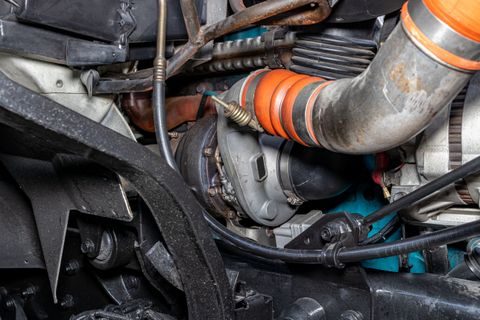
Turbochargers themselves, including replacement and the variable geometry actuators and control that fail on their own and get blamed on the turbo. Charge air coolers and the piping, clamps, and boots that connect them, which is where a startling share of power complaints actually live. Exhaust manifolds and gaskets. Downpipes, flex sections, clamps and hangers. EGR components where they cross into the exhaust side. Wastegates and boost control. Oil feed and drain lines to the turbo, which are cheap, which nobody thinks about, and which are a common reason a new turbo fails early.
On the turbo itself we do both. Most of the time it is a replacement. Where a rebuild is the better economics for the unit, the turbo goes out to be rebuilt and comes back here to be installed, so you are not managing that handoff yourself.
One thing to know before you get quoted: a failed variable geometry actuator is a whole turbo assembly for us, not a standalone part. It is worth asking that question of any shop quoting you, because the two are a meaningful cost apart and it is not always spelled out.
Charge air piping lives in vibration, heat cycling and road spray, and the clamps and boots that hold it together give up gradually. A leak there does not set a dramatic code. It just means the engine is not getting the air it was promised.
What you get instead is a truck that is down on power, burning more fuel to do the same work, and running with a fuel and air balance it was not designed for. That last part matters more than the power complaint, because incomplete combustion means more soot, and more soot means a particulate filter loading faster than it should. A large share of fleets fighting chronic aftertreatment problems are actually fighting an air problem, which is why we look at boost before anybody starts quoting a filter on the DPF and aftertreatment side.
The repair is often a clamp and a boot. The bill it prevents is not.
Turbos are lubricated and cooled by engine oil, and they spin at speeds that make oil quality a real variable rather than a maintenance talking point.
Oil that ran past its interval, an oil feed line that is partially restricted, a drain line that is not draining, or a shutdown habit that never lets a hot turbo cool are all things that kill turbochargers, and none of them are fixed by installing a new one. A turbo that failed and left debris in the intake will also take out its replacement if the piping is not cleaned properly, which is a shortcut that gets taken more often than anyone admits.
So when we replace one, we want to know what killed the first one. That usually means looking at the oil side, the intake path, and how the truck gets operated, and it frequently ends up in diagnostics territory before it ends up in a parts order. Fitting a turbo without answering that question is how a fleet buys the same turbo twice inside a year.
Diagnosis travels well. Boost testing, charge air leak checks, inspection of piping, clamps, boots and the oil lines, and reading what the truck is actually doing under load are all things our technicians handle on customer yards. Charge air piping and clamp repair is genuinely good on-site work and it is often the whole fix.
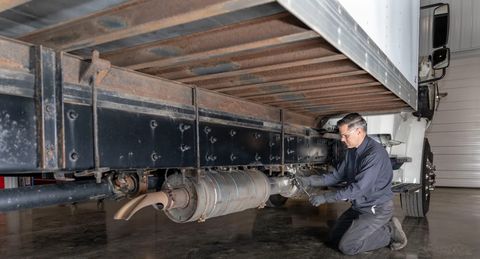
Turbo replacement, manifold work, and anything involving the exhaust coming apart belongs in Greer, where the truck can be up and the fasteners can be dealt with properly. Exhaust hardware on a truck that has spent years in road salt does not come apart on a schedule, and forcing that in a parking lot creates a bigger job.
A note on smoke, since it is the symptom fleets report most and read least. Black smoke generally means fuel without enough air, which points at the intake side, the turbo, or a restriction. Blue smoke means oil where it should not be, which can be the turbo seals or the engine. White smoke can be unburned fuel or coolant, and those are very different conversations. What the smoke is doing, and when, narrows the diagnosis considerably, so it is worth having drivers describe the color rather than just reporting that the truck is smoking.
Start with fuel, because it is the one that bills you every single day. A truck running with a boost leak burns more to do the same work, and across a fleet that is a number nobody sees because it never appears as a repair.
Then the aftertreatment, where excess soot turns into filters plugging early and a truck that spends its life derated or in for regens. Then the turbo itself, which fails and sends debris where debris should not go. And at the far end, a failed turbo that put oil or metal into the intake becomes an engine conversation rather than a turbo one.
Almost all of that starts as a clamp, a boot, or an oil line. That is the whole argument for looking at the air side of a truck before its symptoms get expensive enough to be obvious.
We diagnose it.
You hear what we found.
You approve it.
We do the work.
Pricing on request, and references from fleets your size. What you will not get is a number you did not approve.
Symptoms often start one system over. If the diagnosis points there, these are the usual suspects.
Forced regens, cleanings, and sensor faults, fixed at the cause.
View repair ›

“Turbo blew on 85. They took care of getting me towed to their shop. The next day, they jumped on my 379 pete and swapped my turbo and air to air. Charged my ac and was on my way.”Benjamin Deason · Google review, Greer
“Did a great job, felt like I knew the shop guys all my life. Bunch of good guys who seemed very knowledgeable.”
“Was on the road and ran into an issue. Looked this place up and they were right down the road. Got in and out quick and back on the road.”
“Called ACME for my driver who was on the side of I-85 in Greer. The line was busy, so I moved on and called another company. The gentleman with ACME not only called me back.”
The air side, before the engine side. Boost leaks, a failing variable geometry actuator, a restricted air filter, or a partially blocked charge air cooler will all cost you power without setting a fault. They are also cheaper to find and fix than anything they get mistaken for. Have somebody actually test boost rather than reading codes and guessing.
Maybe, but a new whistle is at least as often a boost leak, which is far better news. Air escaping a loose clamp or a split boot makes noise, costs power, and is a cheap repair. A turbo with bearing wear usually adds other symptoms, oil consumption, smoke, or a change in how it spools. Get it looked at while it is still just a noise.
Usually because whatever killed the first one was still there. The common causes are oil related, a restricted feed line, a drain that is not draining, oil past its interval, or debris left in the intake from the first failure that went straight through the new unit. A turbo replacement that does not include finding the cause is a repair with a scheduled repeat.
Yes, for three reasons. It is a citable defect at inspection, it puts exhaust where people breathe, and depending on where it is, it changes what the aftertreatment sees and can cause faults that get chased in entirely the wrong place. It also tends to get worse fast, because escaping exhaust erodes whatever it is escaping past.
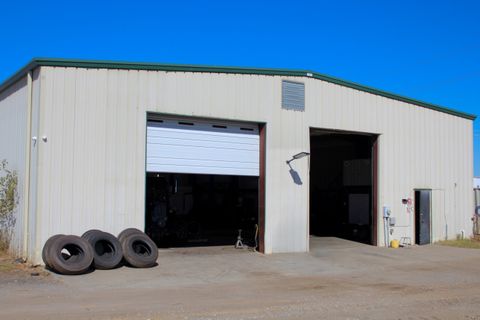
In the shop or in your yard. Same straight answers either way.
Mon to Fri, 8am to 5pm. After hours by arrangement.
Mobile trucks and roadside cover the Upstate. Dedicated on-yard technicians work anywhere in the Southeast.
Call the shop or send the request. You'll get the diagnosis straight and a number before we start.