Benjamin DeasonOwner-operator
★★★★★
“Did a great job, felt like I knew the shop guys all my life. Bunch of good guys who seemed very knowledgeable.”
2024
Exhaust and Turbo

Drivers tell you about a clutch long before a shop does. It grabs high. It shudders pulling away loaded. It takes a second to find a gear it used to find immediately. None of that stops a truck, so none of it gets written up, and the complaint quietly becomes normal. Then the unit is on a grade with a load on it and the clutch is finished, which is a tow rather than a repair. Almost every clutch job we see could have been a smaller one.
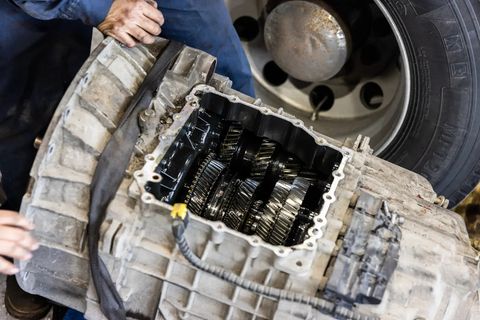
A clutch that is slipping under load is the obvious one, usually reported as the engine revving without the truck responding. Less obvious is the pedal itself. A pedal with no free play left, or one that has crept high, means adjustment or wear that is worth catching now.
Gear complaints split. A transmission that grinds going into a specific gear, that jumps out under load, or that will not shift at all is a very different problem from a truck where the clutch is not releasing fully and the transmission is being blamed for it. Linkage and air shift components cause a surprising share of what gets reported as a bad transmission, and diagnosing that correctly saves an enormous amount of money. That is why this work starts with diagnostics and a road test rather than with a quote.
How the truck is driven shows up here more than anywhere else on the vehicle. Two identical tractors on identical routes can be a hundred thousand miles apart on clutch life, and the difference is entirely in the seat. That is not a reason to blame drivers, it is a reason to look at clutch wear across your fleet as information about training rather than as bad luck spread unevenly.
Noise matters too. A rattle at idle that disappears with the clutch in, or a whine that changes with road speed rather than engine speed, are both telling you where to look, and one of those is usually not the transmission at all but the driveline and axles.
Clutch replacement and adjustment. Release bearings, forks, linkage, and air shift components. Input shafts and seals. Transmission removal and installation. Leaks at the seals and the housing. Shift towers and controls. Clutch brake and pedal issues. Driveline components that get pulled into the same job, because they usually should be while everything is out.
Automated manuals as well as standard manuals, including the clearance and calibration work an AMT needs after service. A growing share of the trucks coming through are automated, and a shop that quietly avoids them is a shop your newer units cannot use.
On the box itself we do both. Some transmissions are worth rebuilding in house and some are better replaced with a remanufactured unit, and the right call depends on the transmission, the truck, and what you need from that seat. You get told which one we think it is and why before anything is ordered.
Fluid deserves more attention than it gets. Gear oil is not a lifetime fill, and a transmission run low or on oil that is past its service life wears internally in ways that do not announce themselves until the noise starts. It is checked on every scheduled service we do, and it is one of those items that costs almost nothing to address and a great deal to ignore.
Clutch adjustment is the same story. On a truck where adjustment is checked as part of a maintenance cycle, a clutch tends to reach the end of its service life as a planned replacement. On a truck where nobody is checking, it reaches the end of its service life on a grade.
Almost all of it. A clutch or transmission job needs a lift, room to drop a heavy assembly safely, and clean conditions, and none of that describes a customer yard.
What does travel is the diagnosis. Our mobile technicians can road test a unit on your property, check adjustment and free play, look at linkage and air shift components, and tell you whether you are looking at a clutch, a transmission, a driveline, or something that is not any of those. That matters because it means you find out what the job actually is before a truck moves anywhere, and because a meaningful number of these turn out to be adjustment rather than replacement.
When the unit does come to Greer, it arrives with the diagnosis done. Nobody is starting over.
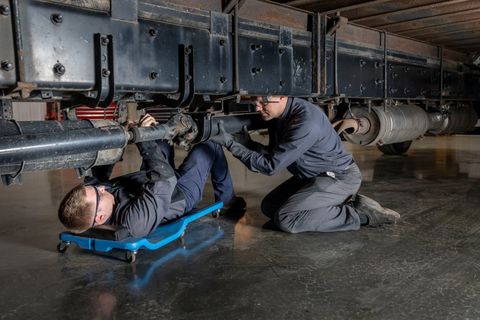
It is also worth saying what we do with the truck once it is apart. A transmission or clutch job puts a technician in a place they will not be again for years, with clear access to the driveline, the rear of the engine, the crossmembers and the wiring that runs through all of it. Anything we find while we are in there comes back to you as information, not as an automatic addition to the bill. Some of it will be worth doing while the truck is open, because the labor is already spent. Some of it will not be, and we will say so.
More than on most, because clutch and transmission failures take other things with them.
A clutch run to the end does not just wear out a disc. It heats and can damage the flywheel, which turns a clutch kit into a clutch kit plus a flywheel and the labor to deal with it. Slipping puts heat where it does not belong. A transmission run low on fluid or with a leak nobody addressed grinds itself into a rebuild rather than a seal. And every one of these failures happens under load, because that is when the stress is highest, which means the failure happens at a customer, on a grade, or in traffic rather than in your yard.
There is also the driver side of it. A truck that is difficult to shift all day is a truck people do not want, and in a market where good drivers pick their seats, that is a real cost that never appears on any repair order.
We diagnose it.
You hear what we found.
You approve it.
We do the work.
Pricing on request, and references from fleets your size. What you will not get is a number you did not approve.
Symptoms often start one system over. If the diagnosis points there, these are the usual suspects.
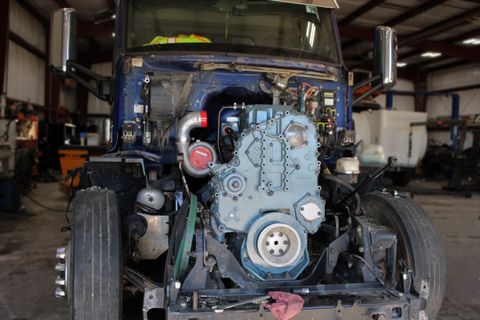

“Turbo blew on 85. They took care of getting me towed to their shop. The next day, they jumped on my 379 pete and swapped my turbo and air to air. Charged my ac and was on my way.”Benjamin Deason · Google review, Greer
“Did a great job, felt like I knew the shop guys all my life. Bunch of good guys who seemed very knowledgeable.”
“Was on the road and ran into an issue. Looked this place up and they were right down the road. Got in and out quick and back on the road.”
“Called ACME for my driver who was on the side of I-85 in Greer. The line was busy, so I moved on and called another company. The gentleman with ACME not only called me back.”
Sometimes, and it is worth checking before assuming the worst. Adjustment and linkage problems produce symptoms that look exactly like a worn clutch, and the fix is dramatically smaller. If the disc is genuinely worn or has been heated, adjustment only buys a little time. We check the cheap possibility first, which is the order most shops skip.
Urgent. Jumping out of gear under load is unsafe for the driver and it damages components every time it happens. It can be linkage, mounting, worn synchronizers or internal wear, and the cost difference between those is large. Get it diagnosed before it becomes an internal repair, because the truck is actively making it worse each trip.
Yes, and that is often the right first step. A technician can road test the unit, check adjustment and free play, and inspect linkage on your property. You find out whether it is a clutch, a transmission, a driveline, or an adjustment before the truck moves. The repair itself needs the lift in Greer.
That depends on the specific job and on parts, and we would rather tell you what we are waiting on than invent a date. What you get before we start is the scope, the number, and your approval. If the schedule changes after that, you hear it when it changes rather than at pickup.
In the shop or in your yard. Same straight answers either way.
Mon to Fri, 8am to 5pm. After hours by arrangement.
Mobile trucks and roadside cover the Upstate. Dedicated on-yard technicians work anywhere in the Southeast.
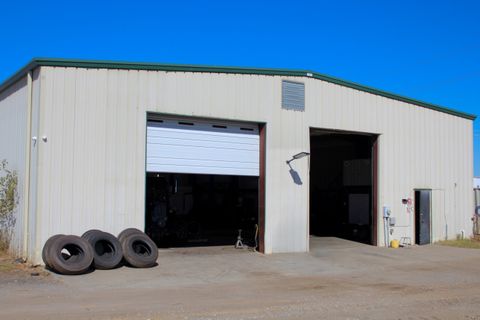
Call the shop or send the request. You'll get the diagnosis straight and a number before we start.